
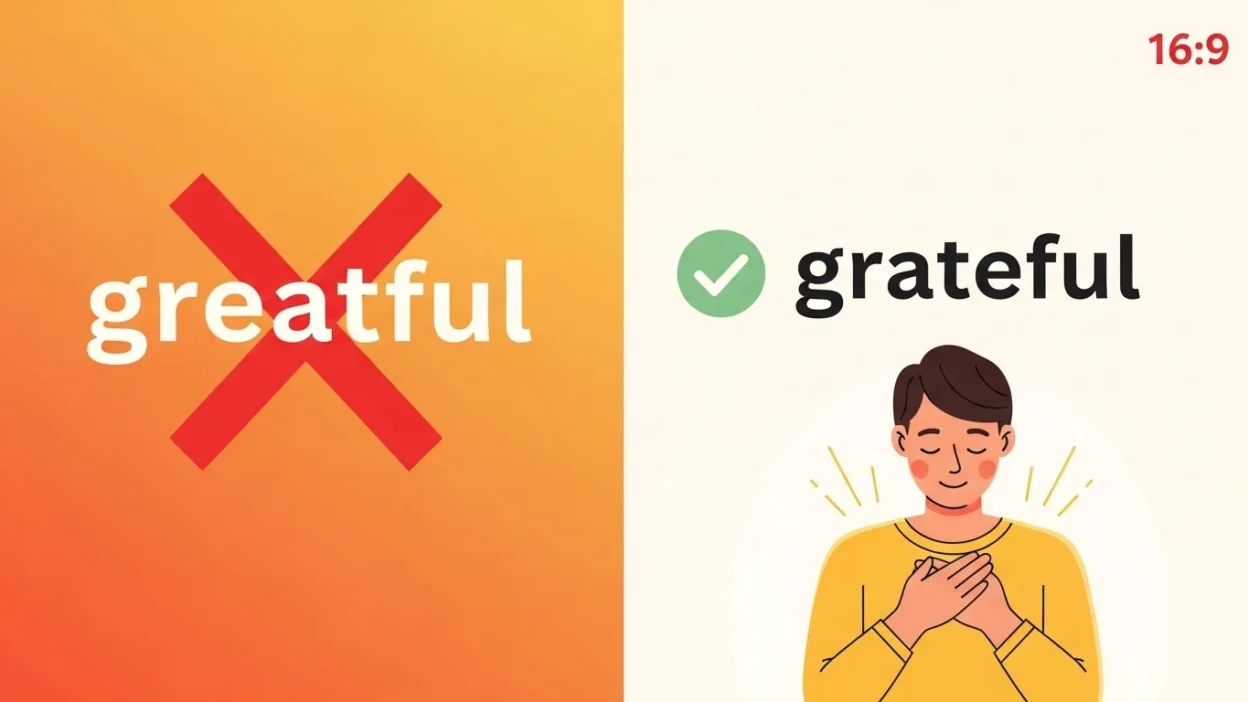
If you’ve ever typed greatful and wondered if it’s correct, you’re not alone. This is a very common spelling mistake because the word sounds like it includes “great.” However, only one form is correct in standard English.
Let’s clearly understand greatful vs grateful so you can use the right spelling every time.
Quick Answer
- Grateful ✅ is the correct spelling
- Greatful ❌ is incorrect
👉 In short:
Always use “grateful.”
What Does “Grateful” Mean?
Grateful means feeling or showing thankfulness and appreciation.
Common Uses of Grateful
- Expressing thanks
- Showing appreciation
- Acknowledging kindness
Examples of Grateful
- I am grateful for your help.
- She felt grateful for the opportunity.
- We are truly grateful for your support.
Synonyms for Grateful
- Thankful
- Appreciative
- Obliged
- Indebted
Why Is “Greatful” Incorrect?
Although greatful looks logical (as if it means “full of great”), it is not a real word in standard English.
The Real Origin
- Grateful comes from the word grate (meaning pleasing or thankful in older English), not great.
👉 That’s why the correct spelling is:
grate + ful → grateful
Greatful vs Grateful: Key Differences
| Feature | Grateful | Greatful |
|---|---|---|
| Spelling | Correct | Incorrect |
| Usage | Standard English | Not accepted |
| Meaning | Thankful or appreciative | ❌ No valid meaning |
| Example | I am grateful for you | ❌ I am greatful for you |
Simple Trick to Remember
Here’s an easy way to avoid the mistake:
👉 “Grateful has no ‘e’ after ‘gr’.”
Or think:
Grateful = gratitude (same root)
Common Mistakes to Avoid
1. Adding an Extra “e”
❌ Incorrect: I am greatful for your help.
✅ Correct: I am grateful for your help.
2. Confusing It with “Great”
Just because something is “great” doesn’t change the spelling.
3. Ignoring Spell Check
Most spell check tools will flag greatful—pay attention to corrections.
Real-Life Examples
In Daily Conversation
- I’m grateful for your kindness.
In Professional Writing
- We are grateful for your continued support.
In Emotional Expression
- She felt deeply grateful for the help she received.
American vs British English Differences
There is no difference between American and British English:
- Both use grateful
- Greatful is incorrect in both
Related Words and LSI Keywords
To deepen your understanding:
- Gratitude meaning
- Thankful vs grateful
- Appreciation expressions
- Common spelling mistakes
- English vocabulary tips
- Polite expressions
FAQs
Is greatful a correct spelling?
No, greatful is incorrect.
What is the correct spelling: greatful or grateful?
The correct spelling is grateful.
Why do people spell it as greatful?
Because it sounds like it comes from great, but it doesn’t.
What does grateful mean?
It means feeling thankful or appreciative.
Is grateful used in formal writing?
Yes, it is appropriate in both formal and informal contexts.
Are there regional differences?
No, spelling is the same in US and UK English.
What is a synonym for grateful?
Thankful or appreciative.
How can I remember the correct spelling?
Think of gratitude → grateful.
Summary
The difference between greatful vs grateful is simple: only one is correct. Grateful is the proper spelling used to express thankfulness, while greatful is a common mistake and should be avoided.
Understanding this helps you write more accurately and professionally.
Final Thoughts
English spelling can sometimes be tricky, especially when words sound like they should follow a certain pattern. In the case of grateful, remembering its connection to gratitude makes it much easier to spell correctly.
With practice, this small detail becomes second nature helping you communicate clearly and confidently in any situation.

Sarah Davis is a content writer at BibliHub.com, focused on delivering clear, organized, and easy-to-read articles. Her writing prioritizes simplicity without losing accuracy, helping readers quickly grasp key ideas. Sarah is dedicated to creating content that is informative, reliable, and suitable for a wide audience seeking practical knowledge.