
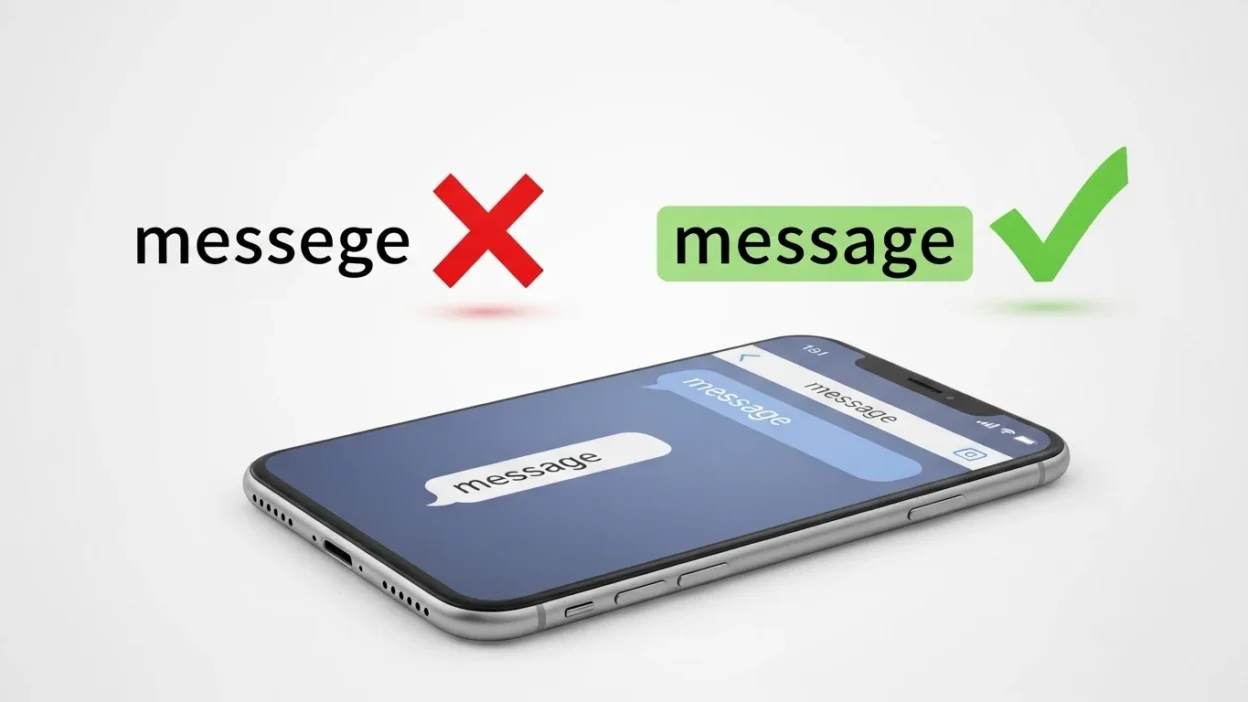
If you’ve ever typed messege and wondered if it’s correct, you’re not alone. This is one of the most common spelling mistakes in English. The confusion happens because the word sounds simple but its spelling doesn’t always match how we pronounce it.
Let’s clear it up once and for all so you can write with confidence.
Quick Answer
- Message ✅ is the correct spelling
- Messege ❌ is incorrect and a common misspelling
👉 In short:
Always use “message.” Avoid “messege.”
What Does Message Mean?
Message refers to a piece of communication sent from one person to another. It can be spoken, written, or digital.
Common Uses of Message
- Text messages
- Emails
- Verbal communication
- Social media chats
Examples of Message
- I sent you a message yesterday.
- She left an important message on my phone.
- Did you get his message about the meeting?
Synonyms for Message
- Note
- Communication
- Text
- Information
- Notification
Why Do People Write “Messege”?
The misspelling messege usually happens because:
- The pronunciation sounds like “mes-sej”
- People confuse vowel placement (a vs e)
- Fast typing or autocorrect errors
👉 But in standard English, messege is not a real word.
Message vs Messege: Key Differences
| Feature | Message | Messege |
|---|---|---|
| Spelling | Correct | Incorrect |
| Usage | Standard English | Misspelling |
| Acceptability | Accepted everywhere | Not accepted |
| Meaning | Communication | No meaning |
Simple Trick to Remember
Here’s an easy way to get it right:
👉 Think: “A message has an ‘A’ like ‘a letter.’”
Or remember the pattern:
mess + age = message
Common Mistakes to Avoid
1. Replacing “a” with “e”
❌ Incorrect: Send me a messege.
✅ Correct: Send me a message.
2. Ignoring Spell Check
Even though spell check often catches it, always double-check important writing.
3. Typing Too Fast
This error often appears in quick texts or emails—slow down when accuracy matters.
Real-Life Examples
Everyday Communication
- I’ll send you a message later.
Work or School
- Please read the message carefully before responding.
Digital Context
- He left me a message on WhatsApp.
American vs British English Differences
There is no difference between American and British English:
- Both use message as the correct spelling
- Messege is incorrect in both forms
Related Words and LSI Keywords
To expand your understanding:
- Text message meaning
- Send a message
- Instant messaging
- Communication skills
- Written communication
- Digital messaging
FAQs
Is messege a real word?
No, messege is not a real word. It is a common misspelling of message.
What is the correct spelling: messege or message?
The correct spelling is message.
Why do people misspell message?
Because of pronunciation confusion and typing errors.
Is message used in formal writing?
Yes, it is used in both formal and informal contexts.
Can messege ever be correct?
No, it is always incorrect in standard English.
What is a simple way to remember message spelling?
Remember “mess + age = message.”
Does message have different spellings in UK and US English?
No, the spelling is the same in both.
Summary
The difference between messege vs message is simple: one is correct, and the other is not. Message is the proper spelling used in all forms of English and refers to communication between people. Messege is just a common typo or spelling mistake with no meaning.
Understanding this distinction helps you avoid errors in everyday writing, whether you’re texting, emailing, or working on assignments.
Final Thoughts
Spelling mistakes like messege are easy to make, especially when words don’t sound exactly like they’re spelled. The good news is that once you recognize the correct form message it becomes much easier to spot and avoid the error.
Paying attention to small details like this improves your overall writing clarity and professionalism, making your communication more effective and trustworthy.

Michael Brown is a contributor and author at BibliHub.com, where he produces insightful and research-oriented articles. He values depth, accuracy, and structure in his writing, ensuring that readers receive meaningful and well-supported information. Michael’s work is designed to inform, educate, and provide long-term value to readers interested in learning and exploration.