Confused between paid vs payed? You’re not alone. These two words look almost identical, but only one is correct in most everyday situations. The other is a rare, specialized term used in very specific contexts.
In this guide, you’ll learn the clear difference, when to use each word, and how to avoid common mistakes.
Quick Answer
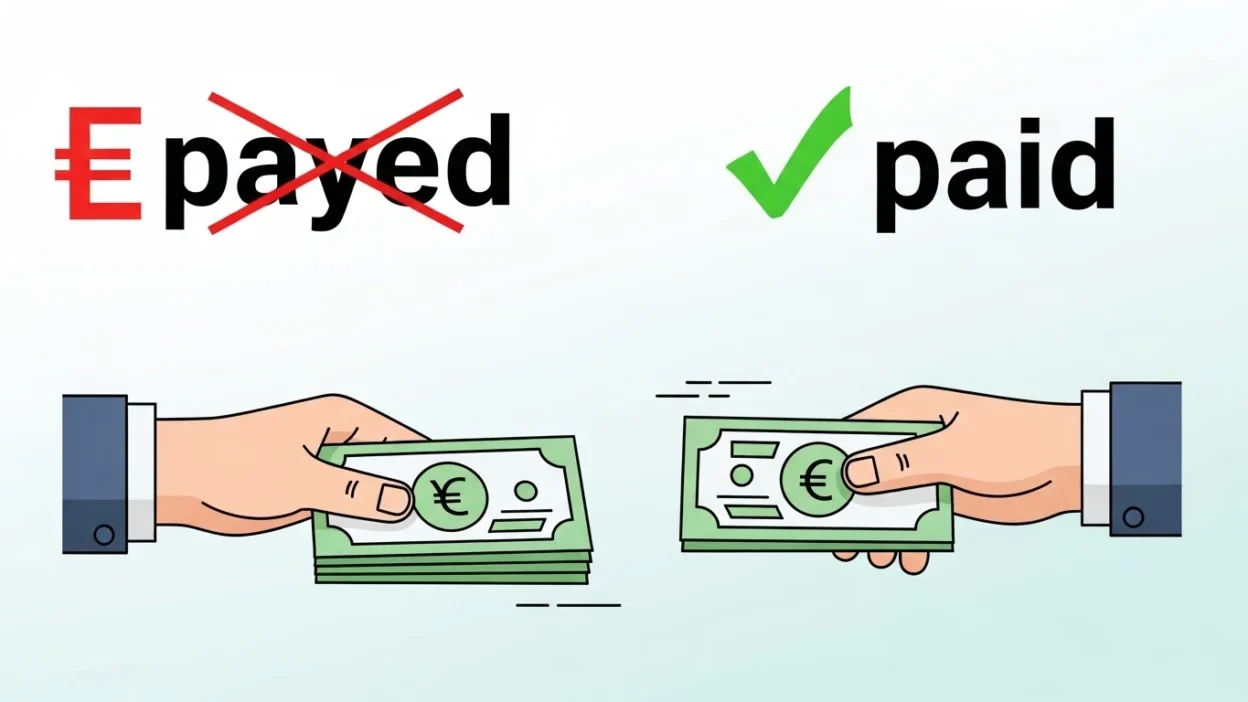
- Paid ✅ is the correct past tense of pay
- Payed ➖ is rare and used only in nautical contexts
👉 In short:
Paid = money or transactions
Payed = ropes/ships (rare use)
What Does “Paid” Mean?
Paid is the correct past tense and past participle of pay. It refers to giving money, settling a bill, or fulfilling a financial obligation.
Common Uses of Paid
- Paying money
- Receiving wages
- Settling debts or bills
Examples of Paid
- I paid the bill yesterday.
- She paid for the groceries.
- He has paid his rent on time.
Synonyms for Paid
- Settled
- Compensated
- Reimbursed
- Remitted
What Does “Payed” Mean?
Payed is a rare and specialized term used mainly in nautical (marine) contexts. It refers to sealing or coating a ship’s surface with tar or similar materials.
Where “Payed” Is Used
- Maritime language
- Shipbuilding or maintenance
Examples of Payed
- The crew payed the deck with tar.
- The sailors payed the seams to prevent leaks.
👉 Outside of these contexts, payed is almost always incorrect.
Paid vs Payed: Key Differences
| Feature | Paid | Payed |
|---|---|---|
| Usage | Very common | Rare, technical |
| Meaning | Gave money | Sealed or coated (nautical) |
| Context | Everyday language | Maritime context |
| Example | She paid the fee | The deck was payed |
Simple Trick to Remember
Here’s an easy way to avoid mistakes:
👉 If it involves money → always use “paid”
👉 Think:
“Money is always paid, never payed.”
Common Mistakes to Avoid
1. Using “Payed” for Money
❌ Incorrect: I payed the bill.
✅ Correct: I paid the bill.
2. Assuming Regular Verb Rules
Most verbs add -ed, but pay is irregular:
- pay → paid (not payed)
3. Ignoring Context
Unless you’re writing about ships or ropes, you almost certainly need paid.
Real-Life Examples
Everyday Use
- She paid for dinner.
Work Context
- Employees are paid weekly.
Rare Technical Use
- The sailor payed the rope carefully.
American vs British English Differences
There is no difference between American and British English:
- Both use paid for financial contexts
- Both recognize payed as a rare nautical term
Related Words and LSI Keywords
To deepen your understanding:
- Pay past tense
- Irregular verbs in English
- Paid meaning
- Common spelling mistakes
- Financial vocabulary
- Verb forms
FAQs
What is the correct spelling: paid or payed?
Paid is correct in almost all cases.
Is payed ever correct?
Yes, but only in rare nautical contexts.
Why is paid not spelled payed?
Because pay is an irregular verb.
Can I say “I payed the bill”?
No, the correct sentence is I paid the bill.
Which word is more common?
Paid is far more common.
What does payed mean in sailing?
It means sealing or coating with tar or similar material.
Is this rule the same in UK and US English?
Yes, there is no difference.
How can I remember the correct form?
If it involves money, always use paid.
Summary
The difference between paid vs payed is simple once you understand the context. Paid is the correct past tense of pay and is used in all financial and everyday situations. Payed is a rare, specialized term used mainly in maritime contexts.
In most cases, you will always need paid, making it the safe and correct choice.
Final Thoughts
English spelling can sometimes feel inconsistent, especially with irregular verbs like pay. However, remembering that paid is the standard form will help you avoid one of the most common mistakes.
With regular use and attention to context, choosing the correct word becomes second nature making your writing clearer and more accurate.

Michael Brown is a contributor and author at BibliHub.com, where he produces insightful and research-oriented articles. He values depth, accuracy, and structure in his writing, ensuring that readers receive meaningful and well-supported information. Michael’s work is designed to inform, educate, and provide long-term value to readers interested in learning and exploration.