Both “in which” and “where” are used to talk about places, situations, or conditions. In many cases, they can mean nearly the same thing, but their style and grammar are slightly different.
Quick Answer
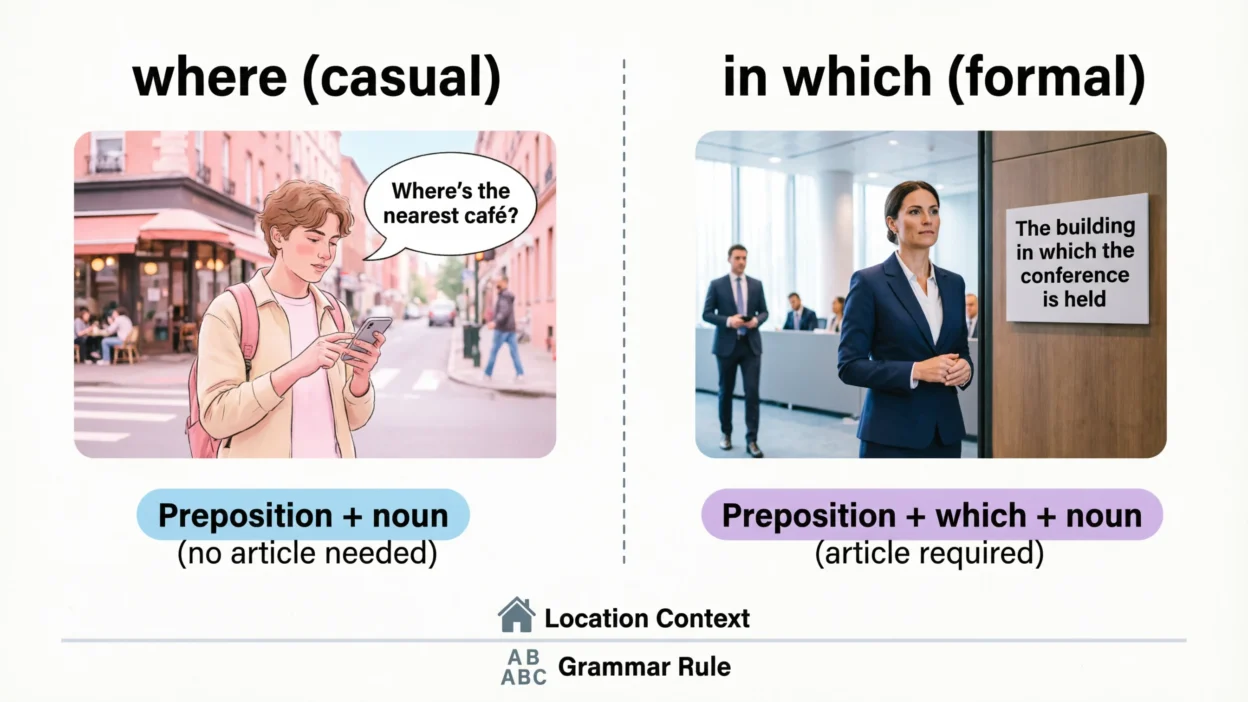
- Where → more natural and conversational
- In which → more formal and precise
👉 In short:
Where = everyday English 📍
In which = formal English 📘
What Does “Where” Mean?
Where is a relative adverb used to refer to:
👉 a place, situation, or condition.
Examples
- This is the house where I grew up.
- We visited a city where many artists live.
- I remember the moment where everything changed. (less formal)
👉 “Where” sounds natural in everyday conversation.
What Does “In Which” Mean?
In which is a formal phrase used instead of “where.”
It means:
👉 “in that place” or “in that situation.”
Examples
- This is the house in which I grew up.
- We discussed a situation in which mistakes were made.
- The country in which she lives is beautiful.
👉 It is more common in:
- formal writing
- academic English
- legal documents
In Which vs Where: Key Differences
| Feature | Where | In Which |
|---|---|---|
| Tone | Natural/conversational | Formal |
| Usage | Everyday English | Academic or formal writing |
| Meaning | Refers to place/situation | Same meaning |
| Simplicity | Shorter and easier | More precise/formal |
Simple Trick to Remember
👉 Where = casual speech 📍
👉 In which = formal writing 📘
Can They Be Interchangeable?
Often, yes.
Example
- The room where we met
- The room in which we met
👉 Both are correct.
However:
- “where” sounds more natural
- “in which” sounds more formal
Common Mistakes to Avoid
1. Using “Where” for Non-Place Nouns
Sometimes “in which” is better for abstract situations.
✔ A case in which people disagreed
⚠️ A case where people disagreed (acceptable but less formal)
2. Overusing “In Which”
Using it too often can make writing sound stiff or overly formal.
3. Forgetting Context
Choose based on tone:
- casual → where
- formal → in which
Real-Life Examples
Where
- This is the café where we first met.
In Which
- The agreement in which both parties participated was successful.
Formal vs Informal Usage
- Where → informal to neutral
- In which → formal and academic
American vs British English
There is no major difference:
- Both forms are used in US and UK English.
FAQs
What is the difference between in which and where?
“Where” is more natural, while “in which” is more formal.
Can they mean the same thing?
Yes, often.
Which is better in academic writing?
In which.
Which sounds more natural in conversation?
Where.
Is this a common confusion?
Yes.
Summary
- Where → casual and natural
- In which → formal and precise
Final Thoughts
Both “where” and “in which” are grammatically correct and often interchangeable. The best choice depends on tone: use where for natural everyday English and in which for formal or academic writing.

Sarah Davis is a content writer at BibliHub.com, focused on delivering clear, organized, and easy-to-read articles. Her writing prioritizes simplicity without losing accuracy, helping readers quickly grasp key ideas. Sarah is dedicated to creating content that is informative, reliable, and suitable for a wide audience seeking practical knowledge.