
This is a very common spelling confusion but the answer is simple.
Quick Answer
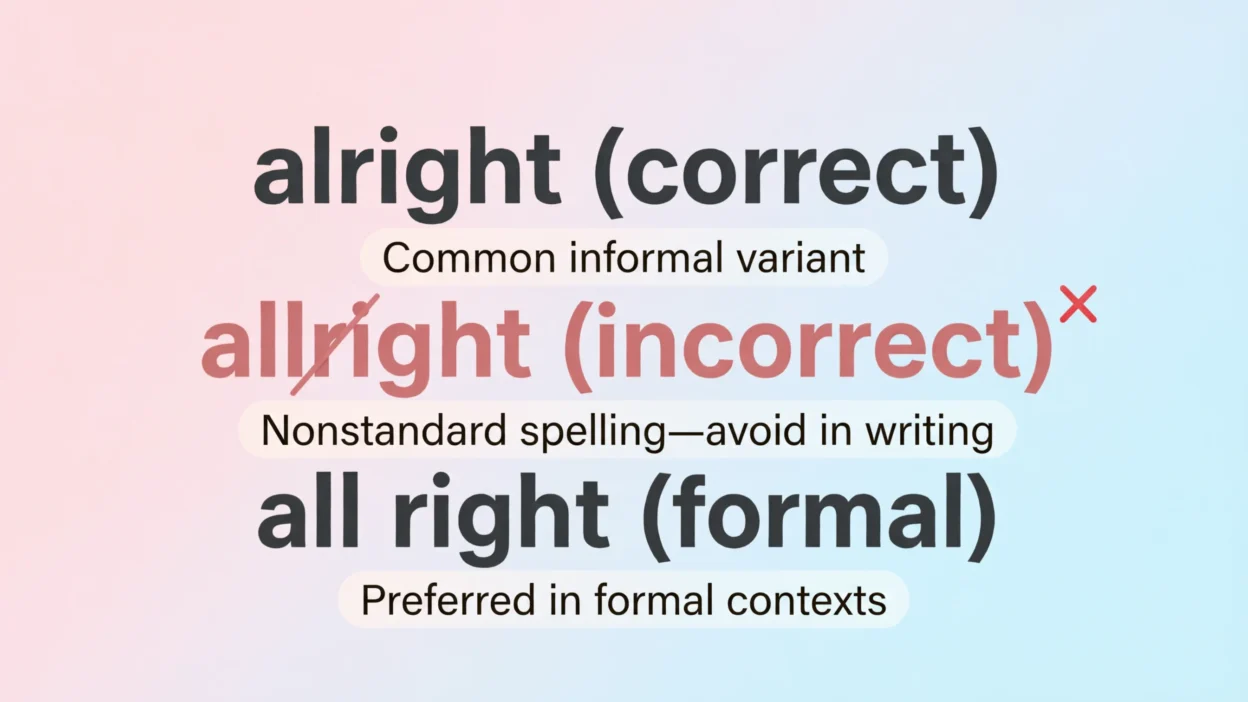
- Alright ✅ correct and widely accepted
- Allright ❌ incorrect
👉 In short:
Always use “alright” (or “all right” in formal writing)
What Does “Alright” Mean?
Alright means:
- Okay
- Acceptable
- Fine
- Safe
Examples of Alright
- Are you alright?
- Everything will be alright.
- The movie was alright, not great.
👉 It’s commonly used in everyday English.
What About “All Right”?
All right (two words) is the more traditional and formal spelling.
Examples
- Are you all right?
- That’s all right with me.
👉 Many style guides still prefer all right in formal writing.
Why “Allright” Is Wrong
❌ Allright is not a standard English word
- It’s considered a spelling mistake
- Not accepted in formal or correct usage
Alright vs All Right vs Allright
| Form | Status | Usage |
|---|---|---|
| Alright | ✅ Correct | Informal, modern |
| All right | ✅ Correct | Formal, traditional |
| Allright | ❌ Incorrect | Not accepted |
Simple Trick to Remember
👉 Two correct forms: “alright” and “all right”
👉 Never use “allright”
Common Mistakes to Avoid
1. Writing “Allright”
❌ Everything is allright
✅ Everything is alright
2. Mixing Formal and Informal Styles
- Formal → all right
- Casual → alright
3. Assuming Only One Is Correct
Both alright and all right are correct.
Real-Life Examples
Informal
- I’m alright now.
Formal
- The results are all right.
American vs British English
- Both alright and all right are used in US and UK English
- “All right” is still preferred in formal writing
FAQs
Which is correct: alright or allright?
Alright is correct. Allright is wrong.
Is “all right” correct?
Yes, especially in formal writing.
Which should I use?
- Informal → alright
- Formal → all right
Is this a common mistake?
Yes.
Summary
- Alright ✔ modern and correct
- All right ✔ formal and correct
- Allright ❌ incorrect
Final Thoughts
To keep your writing clear and correct, avoid allright completely. Use alright for casual writing and all right for formal situations.

Michael Brown is a contributor and author at BibliHub.com, where he produces insightful and research-oriented articles. He values depth, accuracy, and structure in his writing, ensuring that readers receive meaningful and well-supported information. Michael’s work is designed to inform, educate, and provide long-term value to readers interested in learning and exploration.