These two spellings often confuse learners—but the difference is simple and mostly about regional preference.
Quick Answer
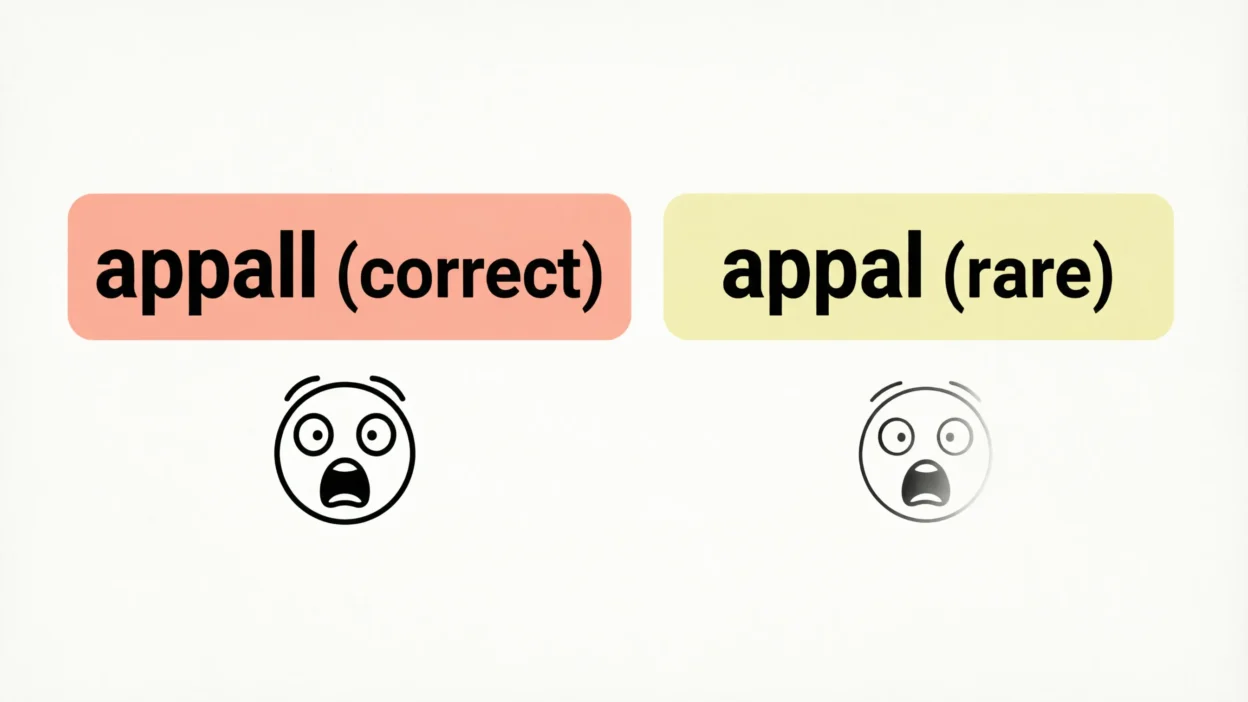
- Appall → preferred in modern English (especially American English)
- Appal → less common (mainly British variant)
👉 In short:
Use “appall” in most situations
What Does “Appall” Mean?
Appall means to shock, horrify, or greatly disturb someone.
Examples
- The news appalled everyone.
- His behavior will appall the audience.
- She was appalled by the conditions.
👉 It expresses strong negative emotion (shock or horror).
What Does “Appal” Mean?
Appal has the same meaning as appall, but:
- It is less commonly used
- Mostly seen in British English
Example
- The decision appalled/appalled (or appalled/appal variant) many people.
👉 In practice, “appall” is much more common globally.
Appal vs Appall: Key Differences
| Feature | Appall | Appal |
|---|---|---|
| Spelling | More common | Less common |
| Region | US & modern English | Mostly British (rare) |
| Meaning | Shock or horrify | Same |
| Preference | Strongly preferred | Not recommended |
Simple Trick to Remember
👉 “Appall” has double “l” like “shock aLL” ✔
Common Mistakes to Avoid
1. Using “Appal” in Formal Writing
❌ It may look unusual
✅ Use appall
2. Spelling Errors
- Don’t confuse with similar-looking words
3. Overthinking the Choice
Just remember:
👉 Appall = safe choice
Real-Life Examples
- The crime appalled the community.
- I was appalled by what I saw.
American vs British English
- American English → almost always appall
- British English → both exist, but appall is still more common today
FAQs
Which is correct: appal or appall?
Both exist, but appall is preferred.
Is appal wrong?
No, but it’s rare and less standard.
Which should I use in writing?
Use appall.
What does appall mean?
To shock or horrify.
Is this a common confusion?
Yes.
Summary
- Appall ✔ correct and widely used
- Appal ⚠️ rare variant
Final Thoughts
To keep your writing clear and modern, always choose appall. It’s the form most readers expect and recognize easily.

Sarah Davis is a content writer at BibliHub.com, focused on delivering clear, organized, and easy-to-read articles. Her writing prioritizes simplicity without losing accuracy, helping readers quickly grasp key ideas. Sarah is dedicated to creating content that is informative, reliable, and suitable for a wide audience seeking practical knowledge.