Many English learners confuse better than and better then because the words than and then sound very similar.
However, only one is correct when making comparisons.
This complete guide explains the difference clearly with examples, rules, and memory tricks.
Quick Answer
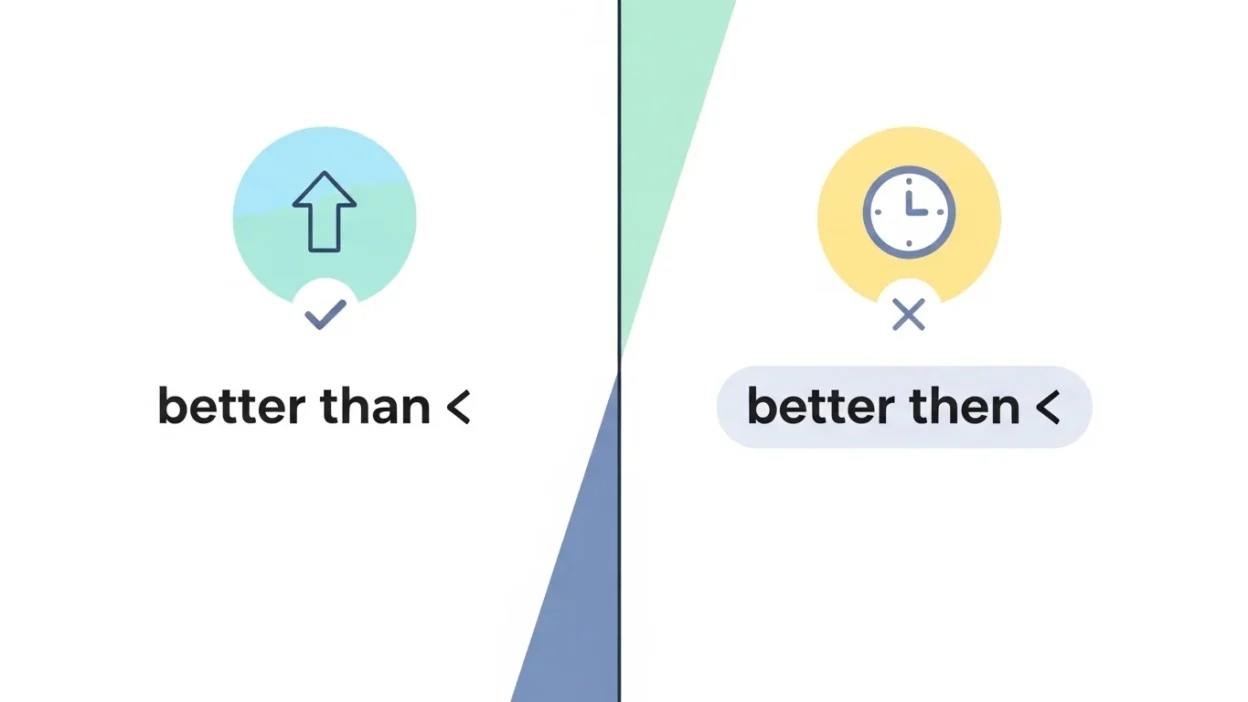
- Better than ✅ correct
- Better then ❌ incorrect (for comparison)
👉 In short:
Use “than” when comparing things
What Does “Better Than” Mean?
Better than is used to compare two people, things, actions, or situations.
It means:
👉 superior to
👉 more desirable than
👉 higher quality than
When to Use “Better Than”
Use this phrase whenever you are comparing.
Examples of Better Than
- This phone is better than the old one.
- She sings better than her sister.
- Reading is better than watching TV all day.
- Today is better than yesterday.
👉 If two things are being compared, use than.
What Does “Then” Mean?
Then refers to time, sequence, or what happens next.
It means:
👉 after that
👉 next
👉 at that time
When to Use “Then”
Use it when talking about order or timing.
Examples of Then
- Finish your homework, then play.
- Back then, life was simpler.
- First study, then relax.
👉 “Then” is about time, not comparison.
Better Than vs Better Then: Key Differences
| Feature | Better Than | Better Then |
|---|---|---|
| Correct? | Yes | No (for comparison) |
| Usage | Comparison | Time/sequence only |
| Meaning | Superior to | After that / next |
| Example | Better than before | ❌ Better then before |
Why “Better Then” Is Wrong
When comparing things, English grammar requires than, not then.
Incorrect:
❌ This is better then that.
Correct:
✅ This is better than that.
The confusion happens because both words sound similar.
Simple Trick to Remember
Think of the Letter “A”
ThAn = compArison
Example:
- Better than
- Faster than
- Bigger than
Think of the Letter “E”
ThEn = timE
Example:
- Eat, then sleep
- Work, then rest
Common Mistakes to Avoid
1. Using “Then” in Comparisons
❌ She is smarter then me.
✅ She is smarter than me.
2. Mixing Up Sound and Meaning
The words sound similar but have different jobs.
3. Typing Too Quickly
This mistake often happens when writing fast.
Always double-check.
Real-Life Examples
Comparison Examples
- This laptop is better than mine.
- He performs better than expected.
- Prevention is better than cure.
Time Examples
- We ate dinner, then watched a movie.
- Finish this task, then call me.
American vs British English
There is no difference between US and UK English.
Both follow the same rule:
- Than → comparison
- Then → time
Related Words and LSI Keywords
- Than vs then
- Comparison grammar rules
- English writing mistakes
- Common homophones
- Better than grammar
- Then meaning in English
FAQs
Which is correct: better than or better then?
Better than is correct.
Why is “better then” wrong?
Because “then” refers to time, not comparison.
What does “than” mean?
It is used for comparisons.
What does “then” mean?
It refers to sequence or time.
Is this a common grammar mistake?
Yes, it’s one of the most common.
Is there a difference in UK and US English?
No.
How can I remember the difference?
Think:
Than = comparison
Then = time
Can “better then” ever be correct?
Not as a comparison phrase.
Summary
The correct phrase is better than because than is the word used for comparisons.
“Better then” is incorrect when comparing two things.
Remember:
👉 Than = compare
👉 Then = time
Final Thoughts
This is one of the easiest grammar mistakes to fix once you know the rule.
Whenever you compare two things, always choose better than.
If you’re talking about what happens next, use then.
Mastering this small difference will make your English writing look much more polished and accurate.

John Miller is a content author at BibliHub.com, known for creating clear, well-structured, and reader-friendly articles. He focuses on breaking down complex topics into simple, practical explanations that are easy to understand for a global audience. John emphasizes accuracy, research-based information, and logical presentation, making his work reliable and accessible for readers seeking trustworthy knowledge.