This is a very common mix-up but only one form is correct.
Quick Answer
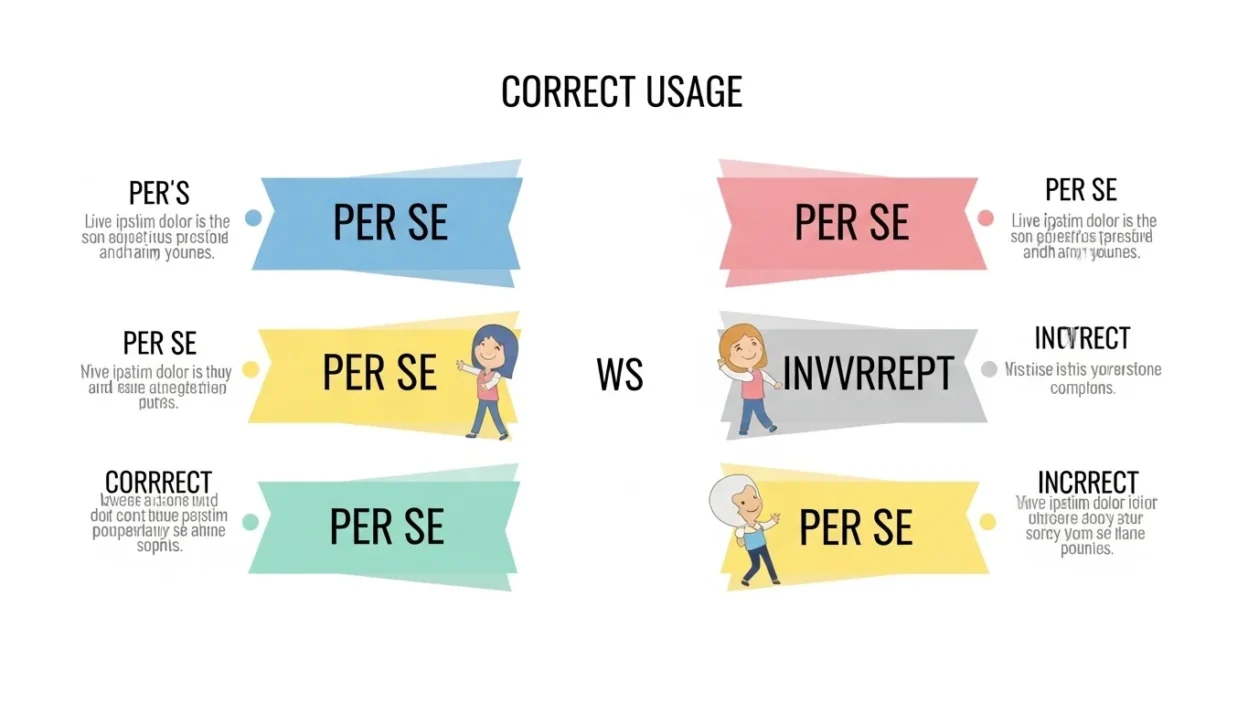
- Per se ✅ correct
- Per say ❌ incorrect
👉 In short:
Always use “per se”
What Does “Per Se” Mean?
Per se is a Latin phrase meaning:
👉 “by itself” or “in itself”
It’s used to clarify that you’re talking about something on its own, not in a broader context.
When to Use “Per Se”
1. Clarifying Meaning
- The issue isn’t the idea per se, but how it was presented.
2. Making Distinctions
- It’s not wrong per se, just unusual.
3. Formal or Thoughtful Speech
- Used in writing, discussions, and analysis
👉 It adds precision and nuance.
Examples of “Per Se”
- The plan isn’t bad per se.
- Money isn’t evil per se.
- It’s not a problem per se, but it could become one.
Why “Per Say” Is Wrong
❌ Per say is a misspelling/mishearing of per se
- It sounds similar, which causes confusion
- But it has no meaning in English
👉 Always write per se
Per Se vs Per Say: Key Differences
| Feature | Per Se | Per Say |
|---|---|---|
| Spelling | Correct | Incorrect |
| Meaning | By itself / inherently | ❌ No meaning |
| Usage | Formal, precise | Not used |
Simple Trick to Remember
👉 Think: “per se = special expression”
Or:
- se looks unique → correct ✔
- say sounds like speaking → wrong ❌
Common Mistakes to Avoid
1. Writing “Per Say”
❌ It’s not wrong per say
✅ It’s not wrong per se
2. Overusing the Phrase
Use it only when you need clarity.
3. Misunderstanding Meaning
It doesn’t mean “exactly”—it means “in itself”.
Real-Life Examples
Everyday Use
- It’s not bad per se, just different.
Formal Writing
- The method is not flawed per se.
Discussion
- The issue isn’t the rule per se.
American vs British English
There is no difference:
- Both use per se
- “Per say” is incorrect everywhere
Related Words and LSI Keywords
- Latin phrases in English
- Common spelling mistakes
- Formal expressions
- English idioms
- Writing clarity tips
FAQs
Which is correct: per say or per se?
Per se is correct.
What does per se mean?
It means “by itself” or “in itself.”
Is per say ever correct?
No, it’s a mistake.
Is per se formal?
Yes, slightly formal.
Can I use it in casual speech?
Yes, but don’t overuse it.
Is this a common mistake?
Yes, very common.
Is it Latin?
Yes, it comes from Latin.
How can I remember it?
Think: per se = special phrase.
Summary
The difference between per say vs per se is simple: per se is the correct phrase meaning “in itself,” while per say is incorrect.
Final Thoughts
Even though “per say” sounds right, it’s not correct. Using per se properly can make your English sound more precise and polished just don’t overuse it.

Sarah Davis is a content writer at BibliHub.com, focused on delivering clear, organized, and easy-to-read articles. Her writing prioritizes simplicity without losing accuracy, helping readers quickly grasp key ideas. Sarah is dedicated to creating content that is informative, reliable, and suitable for a wide audience seeking practical knowledge.