These two phrases look similar, but they mean different things in English.
Quick Answer
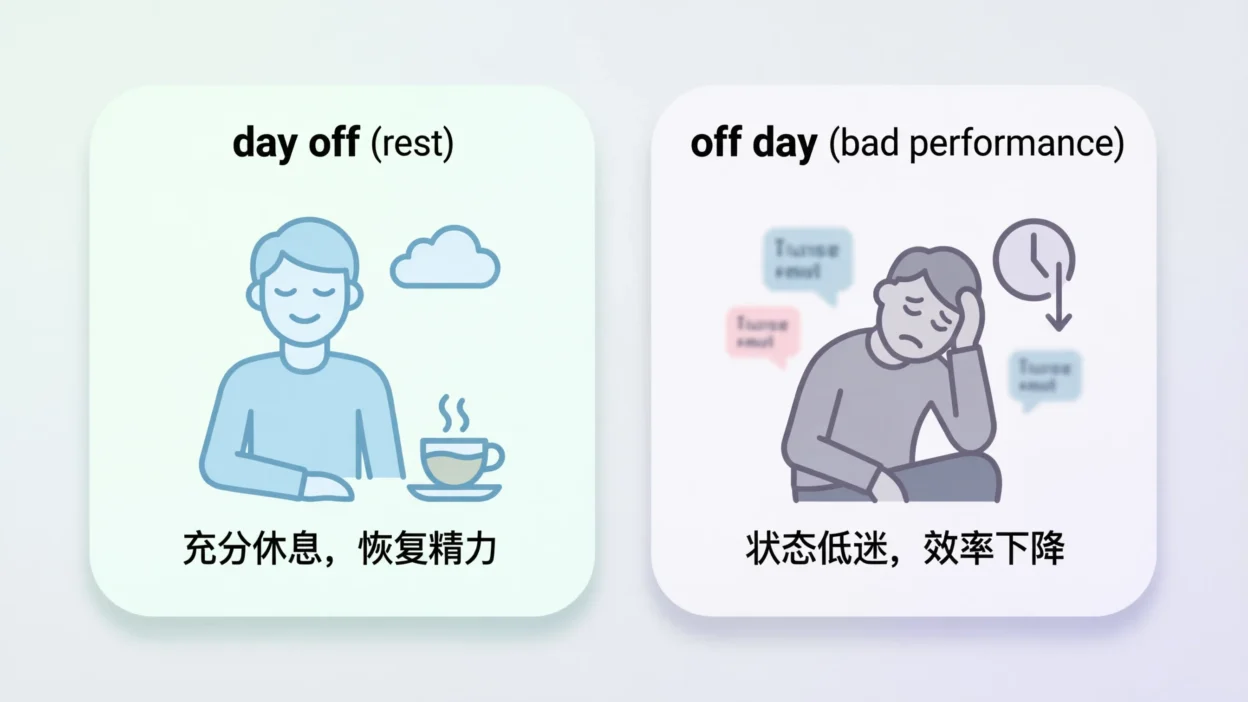
- Day off → a day when you don’t work or study
- Off day → a bad or unusual day
👉 In short:
Day off = rest 🛌
Off day = not your best 😕
What Does “Day Off” Mean?
A day off is a free day from work, school, or responsibilities.
When to Use “Day Off”
- Taking leave
- Relaxing or resting
- Not working
Examples
- I have a day off tomorrow.
- She took a day off to relax.
- Sunday is my day off.
👉 It’s about free time.
What Does “Off Day” Mean?
An off day means a day when:
- You feel unwell, tired, or not focused
- Your performance is worse than usual
When to Use “Off Day”
- Sports or performance
- Mood or energy
- Bad or unusual day
Examples
- I’m having an off day today.
- The player had an off day and missed easy shots.
- She seems a bit off today.
👉 It’s about not feeling or performing well.
Day Off vs Off Day: Key Differences
| Feature | Day Off | Off Day |
|---|---|---|
| Meaning | Free day (no work) | Bad or low-performance day |
| Context | Work, rest | Mood, performance |
| Tone | Positive | Slightly negative |
| Example | Take a day off | Have an off day |
Simple Trick to Remember
👉 Day off = off from work ✔
👉 Off day = day feels off ✔
Common Mistakes to Avoid
1. Mixing Meanings
❌ I’m taking an off day from work
✅ I’m taking a day off from work
2. Using “Day Off” for Bad Mood
❌ I’m having a day off today
✅ I’m having an off day today
3. Confusing Context
Always ask:
👉 Is it about rest or performance?
Real-Life Examples
Rest
- He took a day off to relax.
Bad Performance
- She had an off day at work.
American vs British English
There is no difference:
- Both phrases are used the same way
FAQs
What is the difference between day off and off day?
A day off is free time, while an off day is a bad day.
Which is correct for leave from work?
Day off.
Which is correct for feeling unwell?
Off day.
Can they be interchangeable?
No.
Is this a common confusion?
Yes.
Summary
- Day off → no work, rest
- Off day → bad or low-performance day
Final Thoughts
Even though these phrases look similar, their meanings are quite different. Remember rest vs not your best, and you’ll always choose the correct one.

John Miller is a content author at BibliHub.com, known for creating clear, well-structured, and reader-friendly articles. He focuses on breaking down complex topics into simple, practical explanations that are easy to understand for a global audience. John emphasizes accuracy, research-based information, and logical presentation, making his work reliable and accessible for readers seeking trustworthy knowledge.