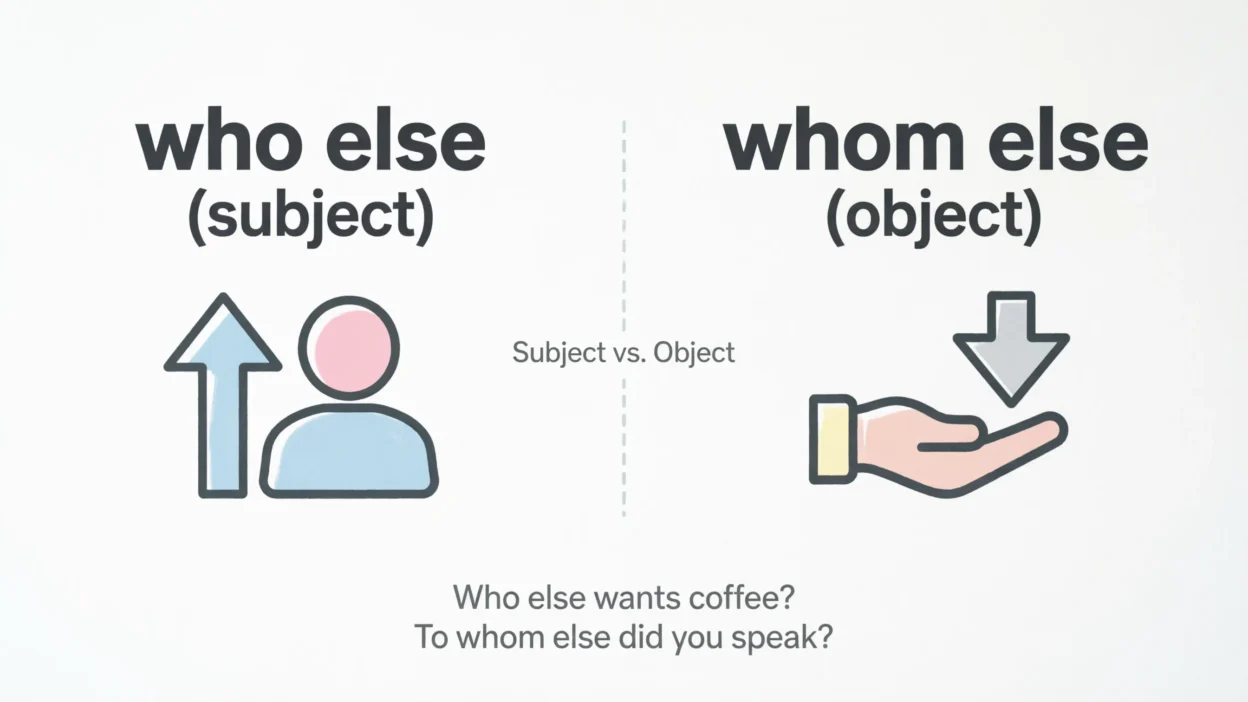
Both “who else” and “whom else” are grammatically correct—but they are used in different situations. The choice depends on whether you need a subject or an object.
Quick Answer
- Who else → subject (most common)
- Whom else → object (formal, less common)
👉 In short:
Who = subject
Whom = object
What Does “Who Else” Mean?
“Who else” is used when referring to the subject of a sentence.
When to Use “Who Else”
- Asking who is doing something
- Informal and everyday speech
- Most common usage
Examples
- Who else is coming to the party?
- Who else wants to join?
- Who else knows about this?
👉 It’s the default and safest choice.
What Does “Whom Else” Mean?
“Whom else” is used when referring to the object of a verb or preposition.
When to Use “Whom Else”
- After prepositions (to, with, for, etc.)
- In formal writing
- When someone receives the action
Examples
- Whom else did you invite?
- To whom else should I speak?
- Whom else are you meeting?
👉 It’s more formal and less common in speech.
Who Else vs Whom Else: Key Differences
| Feature | Who Else | Whom Else |
|---|---|---|
| Grammar Role | Subject | Object |
| Usage | Very common | Formal / less common |
| Position | Beginning of questions | Often after prepositions |
| Example | Who else is coming? | Whom else did you call? |
Simple Trick to Remember
👉 Replace with they → use who
👉 Replace with him/her → use whom
Example
- Who else is coming? → He is coming ✔
- Whom else did you call? → I called him ✔
Common Mistakes to Avoid
1. Using “Who” After Prepositions
❌ To who else should I speak?
✅ To whom else should I speak?
2. Overusing “Whom”
In modern English, “whom” is less common—don’t force it.
3. Ignoring Context
Always check:
👉 Is it subject or object?
Real-Life Examples
Subject (Who)
- Who else is ready?
Object (Whom)
- Whom else did you inform?
Formal vs Informal Usage
- Informal speech → mostly who else
- Formal writing → use whom else where correct
American vs British English
There is no major difference:
- Both follow the same grammar rules
- “Whom” is less common in everyday conversation in both
FAQs
Which is correct: who else or whom else?
Both are correct depending on usage.
Which is more common?
Who else.
When do I use “whom else”?
When it is the object of a verb or preposition.
Can I always use “who else”?
In casual speech, yes—but not in formal grammar.
Is this a common confusion?
Yes.
Summary
- Who else → subject, common
- Whom else → object, formal
Final Thoughts
Understanding who vs whom can seem tricky, but the rule is simple: use who for subjects and whom for objects. In most everyday situations, “who else” will sound natural and correct.

Michael Brown is a contributor and author at BibliHub.com, where he produces insightful and research-oriented articles. He values depth, accuracy, and structure in his writing, ensuring that readers receive meaningful and well-supported information. Michael’s work is designed to inform, educate, and provide long-term value to readers interested in learning and exploration.