Both “having” and “having had” are correct, but they are used in different grammatical situations.
Quick Answer
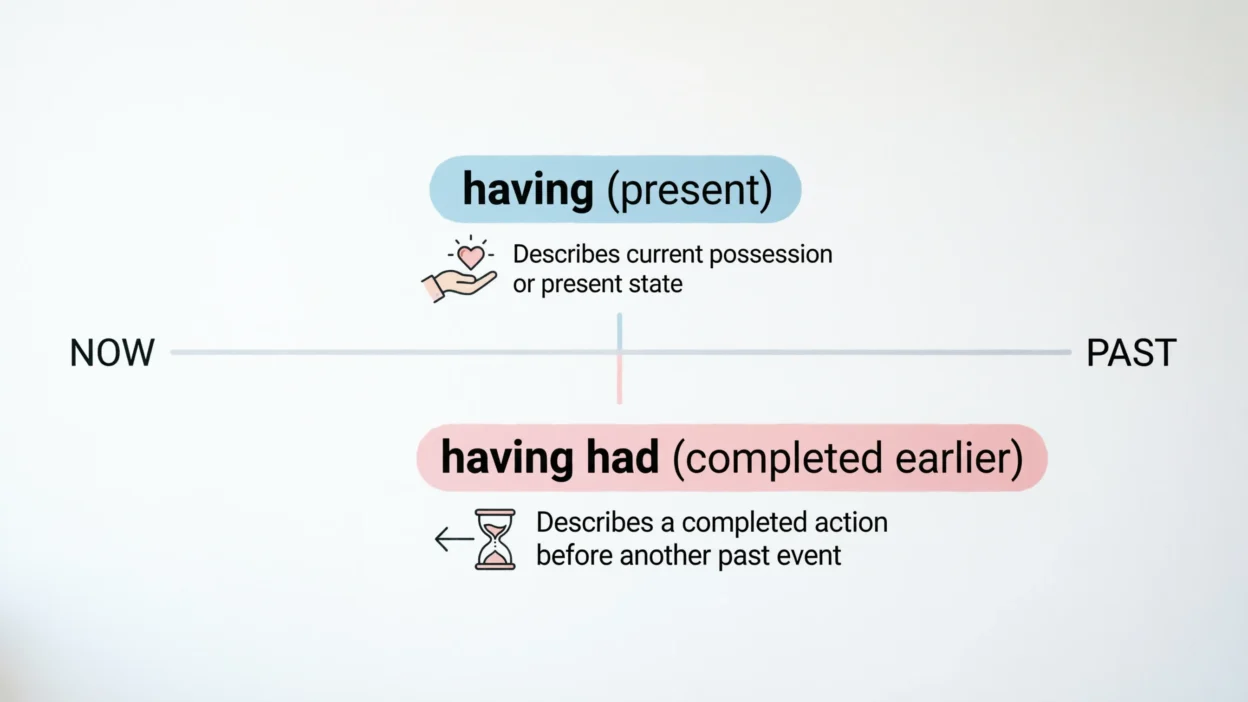
- Having → present participle of have
- Having had → perfect participle showing an earlier completed action
👉 In short:
Having = current/ongoing
Having had = completed before another action
What Does “Having” Mean?
Having is the present participle of have.
When to Use “Having”
- Possession
- Ongoing situations
- General conditions
Examples
- She is having lunch.
- He enjoys having friends around.
- We are having a meeting today.
👉 It usually describes something happening now or generally.
What Does “Having Had” Mean?
Having had is a perfect participle phrase.
It means:
👉 One action happened before another action.
Structure
👉 Having had + noun/object + main clause
Examples
- Having had enough sleep, she felt energetic.
- Having had dinner, they went for a walk.
- Having had experience before, he solved the problem quickly.
👉 It emphasizes a completed earlier experience.
Having vs Having Had: Key Differences
| Feature | Having | Having Had |
|---|---|---|
| Grammar | Present participle | Perfect participle |
| Time | Current/ongoing | Completed before another action |
| Meaning | Possessing/experiencing | Previously experienced |
| Example | Having fun | Having had fun |
Simple Trick to Remember
👉 Having = happening now ✔
👉 Having had = already happened ✔
Common Mistakes to Avoid
1. Using “Having” for Completed Actions
❌ Having dinner, they went home yesterday
⚠️ Possible, but less precise
✅ Having had dinner, they went home.
2. Overusing “Having Had”
Sometimes a simpler sentence sounds better.
- After dinner, they went home. ✔
3. Confusing Tense Sequence
“Having had” always points to an earlier completed action.
Real-Life Examples
Ongoing
- She is having coffee.
Completed Earlier
- Having had coffee, she felt awake.
Formal vs Informal Usage
- Having → common everywhere
- Having had → more formal and advanced grammar
American vs British English
There is no difference:
- Both use these forms the same way
FAQs
What is the difference between having and having had?
Having is present/ongoing, while having had shows a completed earlier action.
Is “having had” grammatically correct?
Yes.
Is “having had” formal?
Yes, slightly formal.
Can I avoid using “having had”?
Yes, often with simpler wording.
Is this a common confusion?
Yes.
Summary
- Having → current or ongoing
- Having had → completed before another action
Final Thoughts
Understanding having vs having had helps you express time relationships more clearly. Use having for present situations and having had when referring to something completed earlier.

Sarah Davis is a content writer at BibliHub.com, focused on delivering clear, organized, and easy-to-read articles. Her writing prioritizes simplicity without losing accuracy, helping readers quickly grasp key ideas. Sarah is dedicated to creating content that is informative, reliable, and suitable for a wide audience seeking practical knowledge.