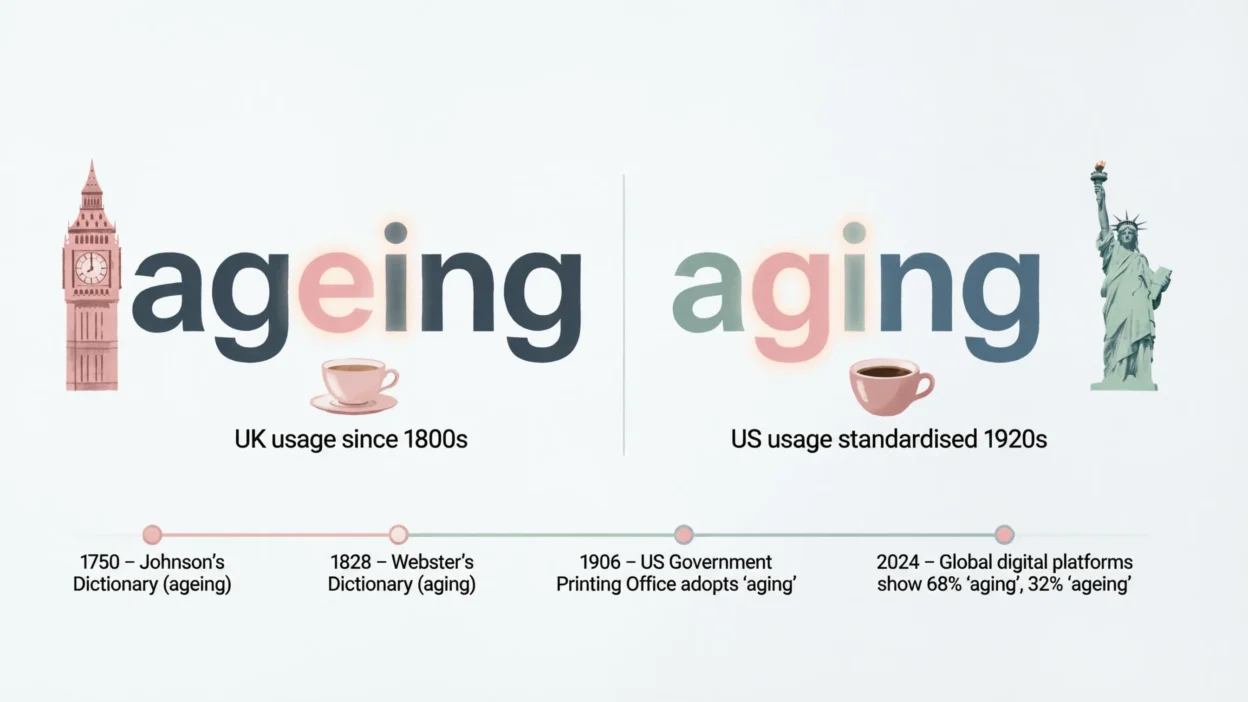
Both “ageing” and “aging” are correct spellings, but the preferred form depends on the type of English being used.
Quick Answer
- Ageing → British English 🇬🇧
- Aging → American English 🇺🇸
👉 In short:
Both are correct
What Does “Aging/Ageing” Mean?
Both words mean:
👉 Growing older or becoming old over time.
They can describe:
- People
- Animals
- Objects
- Processes
Examples
- The population is aging/ageing rapidly.
- She worries about aging/ageing skin.
- The wine is aging/ageing well.
Why Are There Two Spellings?
The difference comes from regional spelling conventions.
British English
👉 prefers ageing
American English
👉 prefers aging
Ageing vs Aging: Key Differences
| Feature | Ageing | Aging |
|---|---|---|
| Region | British English | American English |
| Meaning | Growing older | Same |
| Correctness | Correct | Correct |
| Usage | UK, Australia, etc. | US and Canada |
Simple Trick to Remember
👉 UK → ageing
👉 US → aging
Common Mistakes to Avoid
1. Mixing Spellings
Stay consistent in one document.
2. Thinking One Is Wrong
Both are correct depending on region.
3. Confusing With “Ageing” Pronunciation
Both are pronounced the same way.
Real-Life Examples
British English
- The ageing bridge needs repair.
American English
- The aging process is natural.
American vs British English
This is mainly a regional spelling difference.
- 🇺🇸 American English → aging
- 🇬🇧 British English → ageing
FAQs
Which is correct: ageing or aging?
Both are correct.
Which spelling is American?
Aging.
Which spelling is British?
Ageing.
Do they have different meanings?
No.
Is this a common confusion?
Yes.
Summary
- Ageing ✔ British English
- Aging ✔ American English
Final Thoughts
The choice between ageing and aging depends entirely on your audience and writing style. Just stay consistent with either British or American English throughout your writing.

John Miller is a content author at BibliHub.com, known for creating clear, well-structured, and reader-friendly articles. He focuses on breaking down complex topics into simple, practical explanations that are easy to understand for a global audience. John emphasizes accuracy, research-based information, and logical presentation, making his work reliable and accessible for readers seeking trustworthy knowledge.