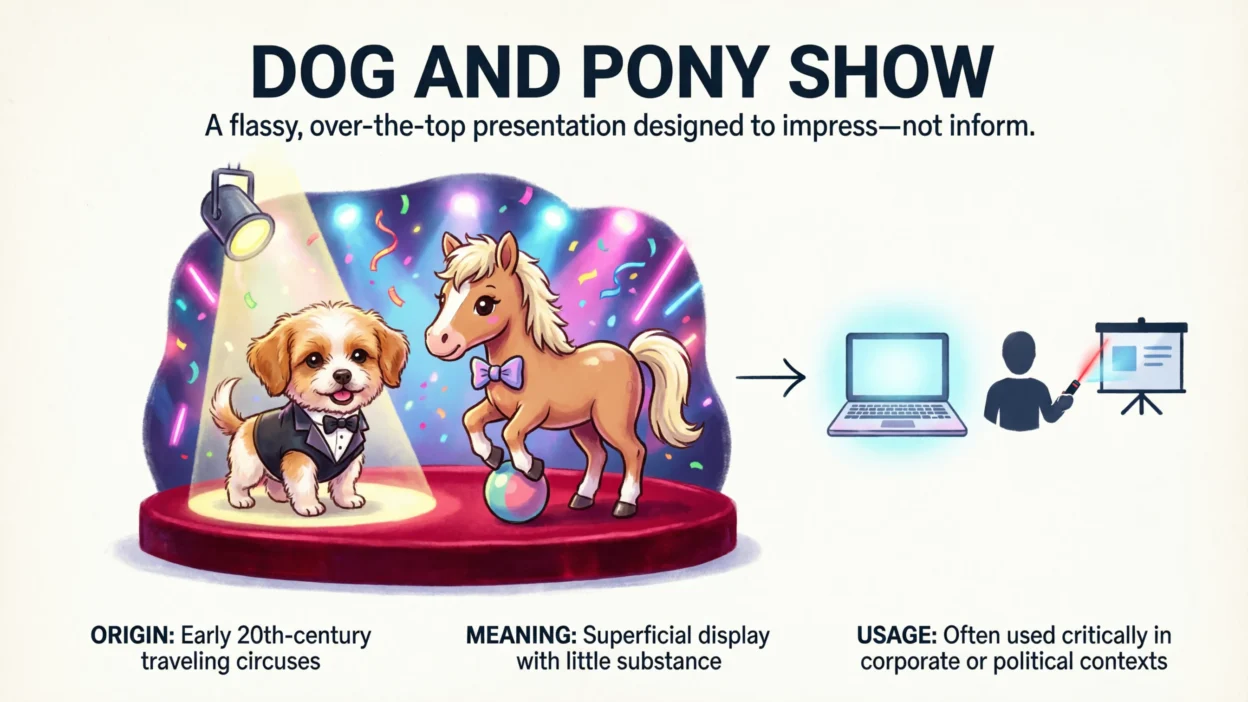
The expression “dog and pony show” is a popular English idiom used to describe an event, presentation, or performance designed mainly to impress people rather than provide real substance.
Quick Answer
Dog and pony show means:
👉 an elaborate presentation or display created to attract attention or gain approval.
It often suggests:
- exaggeration
- showmanship
- style over substance
What Does “Dog and Pony Show” Mean?
The phrase refers to:
👉 a flashy performance intended to entertain, persuade, or impress an audience.
It is commonly used when people feel something is:
- overly dramatic
- more about appearance than reality
- carefully staged for effect
Examples
- The company’s presentation felt like a dog and pony show.
- Voters were tired of political dog and pony shows.
- The event included a lot of marketing and a huge dog and pony show.
Origin of the Idiom
The expression comes from:
👉 small traveling circus acts in the 19th century.
These shows often featured:
- trained dogs
- ponies
- entertaining tricks
- simple performances for crowds
Over time, the phrase became symbolic of:
- promotional spectacles
- exaggerated presentations
- attention-grabbing events
Dog and Pony Show: Modern Meaning
Today, the idiom is often used negatively or humorously.
It can describe:
- business presentations
- political campaigns
- marketing events
- exaggerated meetings
- staged demonstrations
Example
- The investors wanted facts, not another dog and pony show.
Tone of the Expression
The phrase usually carries:
- criticism
- skepticism
- sarcasm
It suggests the speaker believes:
👉 the presentation is more about entertainment than genuine value.
Common Situations Where It’s Used
1. Business
- flashy sales presentations
- dramatic product launches
2. Politics
- campaign speeches
- staged public appearances
3. Media & Entertainment
- exaggerated promotions
- publicity events
Dog and Pony Show vs Real Substance
| Feature | Dog and Pony Show | Genuine Presentation |
|---|---|---|
| Focus | Appearance | Information |
| Style | Flashy | Practical |
| Goal | Impress audience | Communicate value |
| Tone | Often exaggerated | More authentic |
Simple Trick to Remember
👉 Think of a small circus performance 🎪
A dog and pony show tries to entertain and impress people, sometimes more than it informs them.
Common Mistakes to Avoid
1. Taking It Literally
The phrase usually has nothing to do with actual dogs or ponies.
2. Using It Positively
It is often slightly negative or sarcastic.
3. Using It in Very Formal Writing
The idiom is informal and conversational.
Real-Life Examples
- The meeting turned into a complete dog and pony show.
- Customers wanted real answers instead of marketing dog and pony shows.
- The politician’s speech looked more like a dog and pony show than a serious discussion.
Formal vs Informal Usage
- Informal ✔
- Conversational ✔
- Journalism ✔
- Academic/formal writing ⚠️ less common
In formal writing, alternatives include:
- publicity stunt
- exaggerated presentation
- promotional spectacle
American vs British English
The idiom is more common in:
- American English 🇺🇸
But it is also understood in other English-speaking countries.
FAQs
What does dog and pony show mean?
It means an exaggerated or flashy presentation designed to impress people.
Is the phrase negative?
Usually yes.
Where did the idiom come from?
From old traveling circus performances featuring dogs and ponies.
Is it used literally today?
Rarely.
Is this a common English idiom?
Yes.
Summary
- Dog and pony show = flashy or exaggerated presentation
- Usually implies style over substance
- Often used humorously or critically
Final Thoughts
The idiom “dog and pony show” describes situations where entertainment, marketing, or appearance becomes more important than real substance. Although the phrase originally referred to small traveling animal acts, modern English uses it to criticize overly staged presentations in business, politics, advertising, and media.
Understanding this expression helps learners recognize sarcasm and informal tone in English conversations. When someone calls an event a “dog and pony show,” they usually mean it looks impressive on the surface but lacks genuine depth or importance underneath.

Michael Brown is a contributor and author at BibliHub.com, where he produces insightful and research-oriented articles. He values depth, accuracy, and structure in his writing, ensuring that readers receive meaningful and well-supported information. Michael’s work is designed to inform, educate, and provide long-term value to readers interested in learning and exploration.