These two words look different but mean almost the same thing—so what’s the real difference?
Quick Answer
- Unalienable → correct (less common, historical/formal)
- Inalienable → correct (more common, modern usage)
👉 In short:
Same meaning, different preference—“inalienable” is used more today
What Do They Mean?
Both unalienable and inalienable mean:
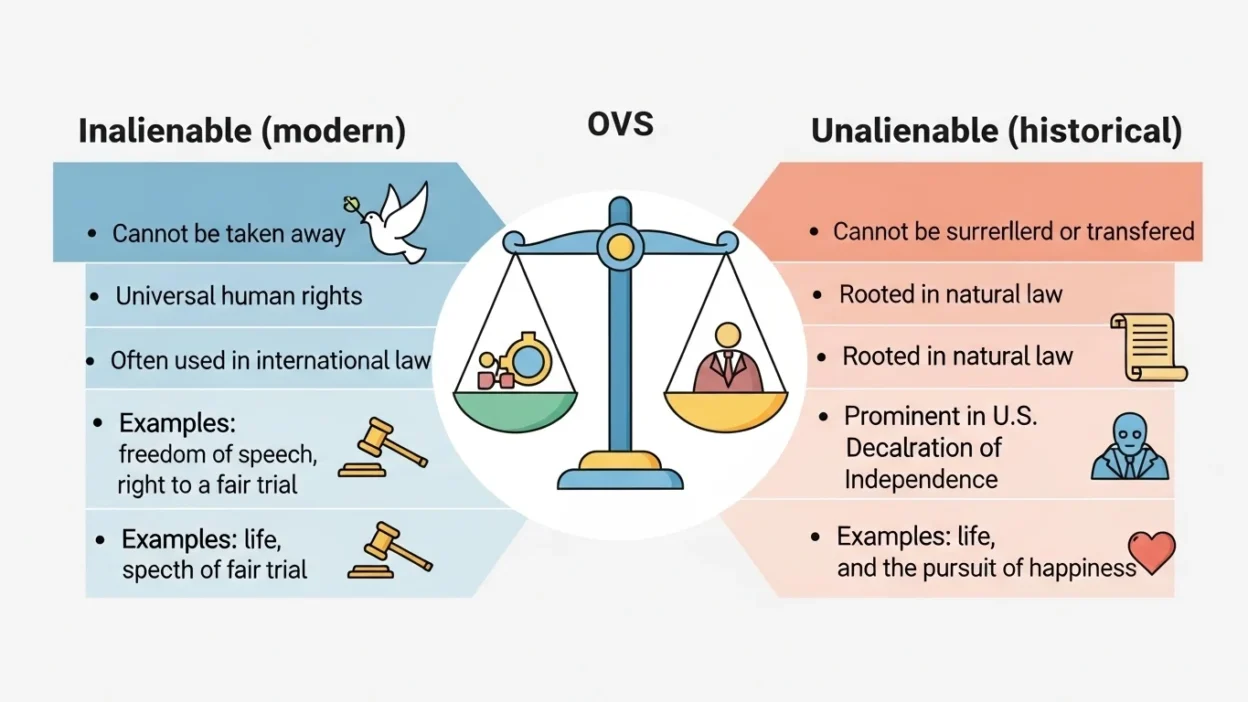
👉 something that cannot be taken away, transferred, or given up
They are often used in legal, moral, or philosophical contexts.
What Does “Inalienable” Mean?
Inalienable is the most commonly used form today.
When to Use “Inalienable”
- Modern writing
- Legal or formal contexts
- General usage
Examples of Inalienable
- Everyone has inalienable rights.
- Freedom is an inalienable human right.
- These values are inalienable.
👉 It’s the standard choice in modern English.
What Does “Unalienable” Mean?
Unalienable has the same meaning, but it’s less commonly used and often sounds more historical or traditional.
When to Use “Unalienable”
- Historical references
- Formal or stylistic writing
- Quoting classic documents
Examples of Unalienable
- The document refers to unalienable rights.
- Certain freedoms are unalienable.
👉 It appears in older or classic texts.
Famous Usage
The word unalienable is famously used in the United States Declaration of Independence:
- “…certain unalienable Rights…”
👉 This is why the word is still recognized today.
Unalienable vs Inalienable: Key Differences
| Feature | Unalienable | Inalienable |
|---|---|---|
| Meaning | Same | Same |
| Usage | Less common | More common |
| Tone | Historical / formal | Modern / standard |
| Preference | Rare | Widely preferred |
Simple Trick to Remember
👉 Modern English → inalienable
👉 Historical/reference → unalienable
Think:
- everyday writing → inalienable ✔
Common Mistakes to Avoid
1. Thinking One Is Wrong
❌ Neither is wrong—both are correct
2. Overusing “Unalienable”
It may sound outdated in modern writing.
3. Ignoring Context
Choose based on tone and audience.
Real-Life Examples
Legal/Modern Context
- Human rights are inalienable.
Historical Context
- The text mentions unalienable rights.
American vs British English
There is no major difference:
- Both forms are understood
- Inalienable is preferred in both
Related Words and LSI Keywords
- Human rights meaning
- Legal vocabulary
- Fundamental rights
- English synonyms
- Formal vs modern language
- Vocabulary differences
FAQs
What is the difference between unalienable and inalienable?
There is no difference in meaning—only usage preference.
Which is more common?
Inalienable is more common.
Is unalienable outdated?
Not outdated, but less commonly used.
Which should I use in writing?
Use inalienable in most cases.
Why is unalienable famous?
Because of its use in the Declaration of Independence.
Are they interchangeable?
Yes, in most contexts.
Is there a UK vs US difference?
No major difference.
Is this a common confusion?
Yes, due to spelling variation.
Summary
The difference between unalienable vs inalienable is mainly about usage. Both mean something that cannot be taken away, but inalienable is the more common and modern form.
Final Thoughts
While both words are correct, inalienable fits best in modern writing, while unalienable carries a more historical tone. Understanding this subtle difference helps you choose the right word for the right context.

Michael Brown is a contributor and author at BibliHub.com, where he produces insightful and research-oriented articles. He values depth, accuracy, and structure in his writing, ensuring that readers receive meaningful and well-supported information. Michael’s work is designed to inform, educate, and provide long-term value to readers interested in learning and exploration.