
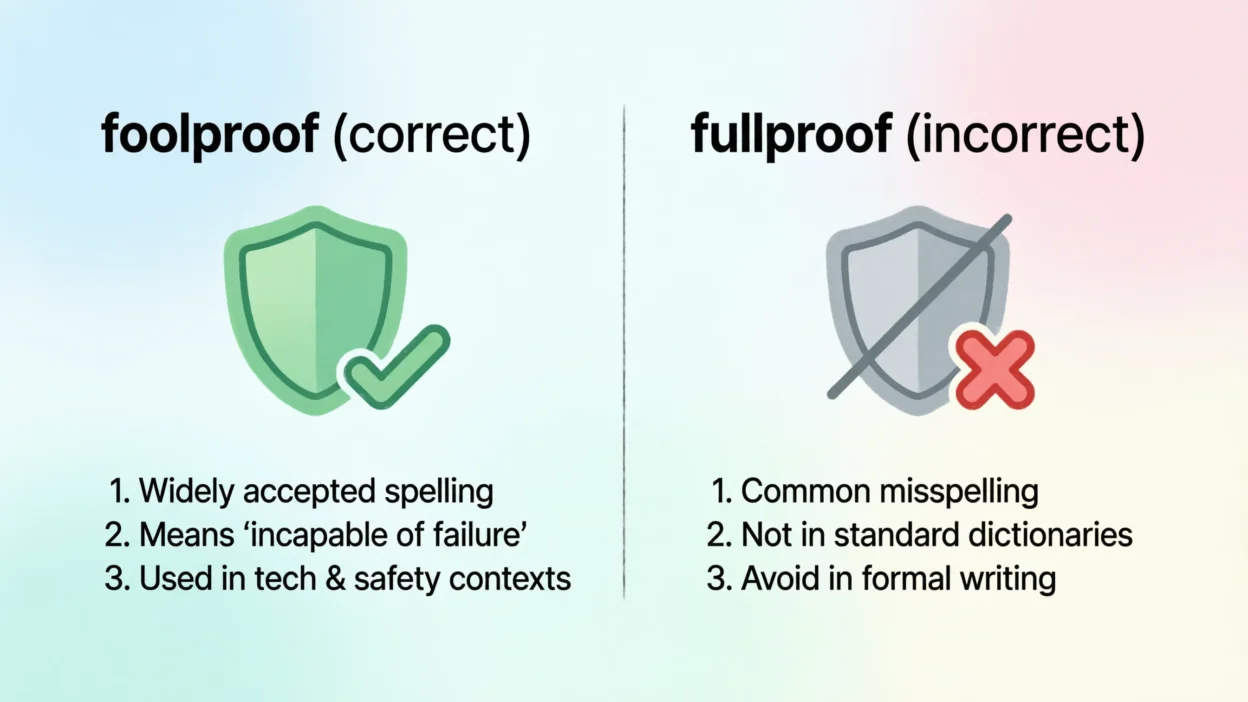
Many people confuse “foolproof” and “fullproof” because they sound similar in pronunciation. However, only one of them is correct in English.
Quick Answer
- Foolproof ✅ correct
- Fullproof ❌ incorrect
👉 Always use “foolproof”
What Does “Foolproof” Mean?
The word foolproof describes something that is:
- Easy to use
- Reliable
- Difficult to misuse or fail
It means a system or method works so well that even an inexperienced person can use it correctly.
Examples
- This recipe is completely foolproof.
- The company designed a foolproof security system.
- Her study plan is simple and foolproof.
👉 It means “safe from mistakes.”
Why “Fullproof” Is Wrong
❌ Fullproof is not a recognized English word.
People usually write it by mistake because:
- “full” and “fool” sound similar
- The pronunciation can be confusing in fast speech
But standard English dictionaries only accept:
✔ foolproof
Origin of the Word “Foolproof”
The word combines:
- fool = someone inexperienced or careless
- proof = resistant or protected against
So:
👉 foolproof = protected against foolish mistakes
Foolproof vs Fullproof: Key Differences
| Feature | Foolproof | Fullproof |
|---|---|---|
| Spelling | Correct | Incorrect |
| Meaning | Reliable and easy to use | ❌ No meaning |
| Dictionary Use | Accepted | Not accepted |
| Usage | Common English | Spelling error |
Simple Trick to Remember
👉 Foolproof protects against fools, not fullness ✔
Common Mistakes to Avoid
1. Writing “Fullproof”
❌ fullproof method
✅ foolproof method
2. Trusting Pronunciation Alone
Even though the words may sound similar, the spelling is different.
3. Using the Wrong Word in Professional Writing
“Fullproof” can look unprofessional because it is incorrect.
Real-Life Examples
- The software installation process is foolproof.
- She created a foolproof business strategy.
- This tutorial provides a foolproof solution.
American vs British English
There is no difference:
- Both American and British English use foolproof
- “Fullproof” is incorrect everywhere
FAQs
Which is correct: foolproof or fullproof?
Foolproof is correct.
Is fullproof a real word?
No.
What does foolproof mean?
Something easy to use and unlikely to fail.
Why do people write fullproof?
Because “fool” and “full” sound similar in speech.
Is this a common spelling mistake?
Yes, very common.
Summary
- Foolproof ✔ correct
- Fullproof ❌ incorrect
Final Thoughts
The correct spelling is always foolproof. Remember that it describes something designed to prevent mistakes and work reliably, even for beginners.

John Miller is a content author at BibliHub.com, known for creating clear, well-structured, and reader-friendly articles. He focuses on breaking down complex topics into simple, practical explanations that are easy to understand for a global audience. John emphasizes accuracy, research-based information, and logical presentation, making his work reliable and accessible for readers seeking trustworthy knowledge.