Both phrases are correct, but they are used in slightly different situations and tones.
Quick Answer
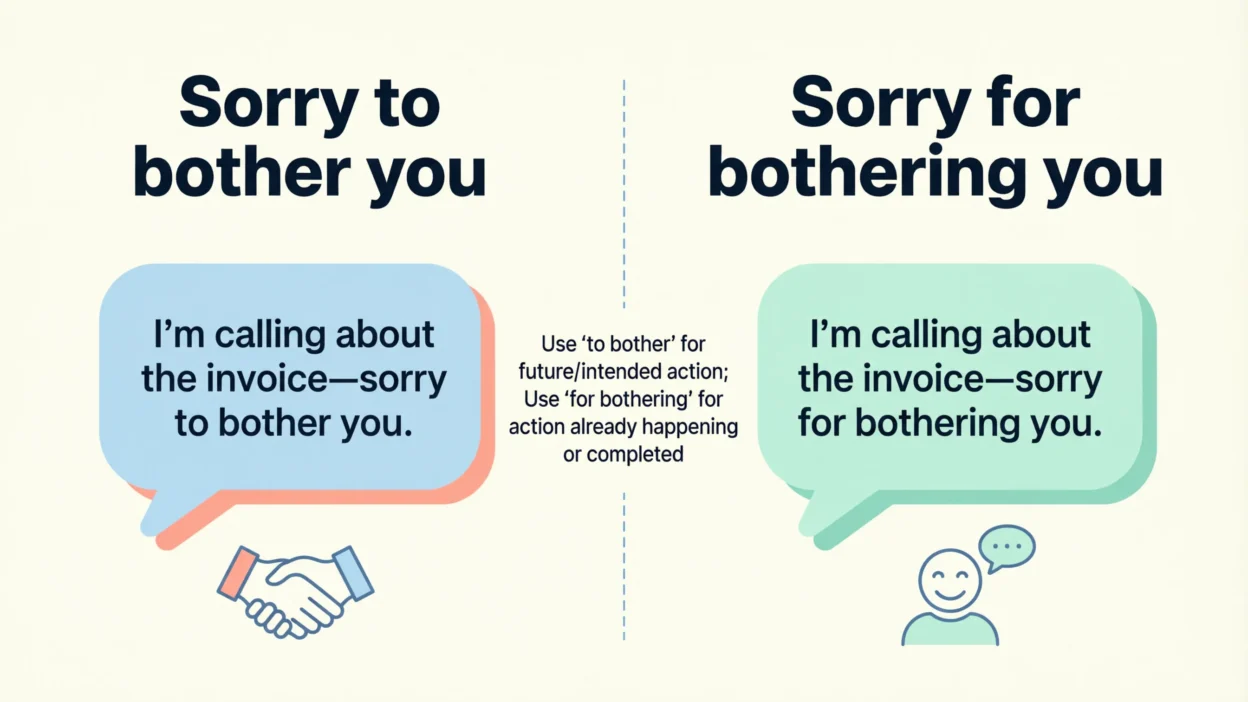
- Sorry to bother you → said before or while interrupting someone
- Sorry for bothering you → said after bothering someone
👉 In short:
To bother = before/during
For bothering = after
What Does “Sorry to Bother You” Mean?
This phrase is usually used before asking something or interrupting someone.
When to Use It
- Starting a conversation politely
- Interrupting someone
- Asking for help
Examples
- Sorry to bother you, but can you help me?
- Sorry to bother you at work.
- Sorry to bother you, I have a question.
👉 It sounds polite and respectful.
What Does “Sorry for Bothering You” Mean?
This phrase is usually used after you think you may have annoyed or interrupted someone.
When to Use It
- Apologizing afterward
- Feeling guilty about interruption
- Ending a conversation politely
Examples
- Sorry for bothering you earlier.
- I’m sorry for bothering you so much.
- Thanks, and sorry for bothering you.
👉 It sounds more reflective or apologetic.
Key Difference
| Phrase | Time Used | Tone |
|---|---|---|
| Sorry to bother you | Before/during interruption | Polite request |
| Sorry for bothering you | After interruption | Apology afterward |
Simple Trick to Remember
👉 To bother = before action
👉 For bothering = after action
Common Mistakes to Avoid
1. Using the Wrong Timing
❌ Sorry for bothering you, can I ask something?
⚠️ Understandable, but less natural
✅ Sorry to bother you, can I ask something?
2. Overusing Apologies
Sometimes a simple “Excuse me” works better.
3. Forgetting Context
Think:
👉 Am I starting the interruption or apologizing after it?
Real-Life Examples
Before Asking
- Sorry to bother you, do you have a minute?
After Interrupting
- Sorry for bothering you so late.
American vs British English
There is no major difference:
- Both phrases are common in US and UK English
FAQs
Which is more polite?
Both are polite.
Which is used before asking something?
Sorry to bother you.
Which is used after interruption?
Sorry for bothering you.
Can they be interchangeable?
Sometimes, but timing matters.
Is this a common confusion?
Yes.
Summary
- Sorry to bother you → before interrupting
- Sorry for bothering you → after interrupting
Final Thoughts
Both expressions are natural and polite. The main difference is timing: use “sorry to bother you” when beginning an interruption and “sorry for bothering you” when apologizing afterward.

Michael Brown is a contributor and author at BibliHub.com, where he produces insightful and research-oriented articles. He values depth, accuracy, and structure in his writing, ensuring that readers receive meaningful and well-supported information. Michael’s work is designed to inform, educate, and provide long-term value to readers interested in learning and exploration.