Confused between emasculate and demasculate? You’re not alone. These words look similar, but only one is accepted in standard English.
This guide clearly explains emasculate vs demasculate, with meanings, examples, and easy tips to remember.
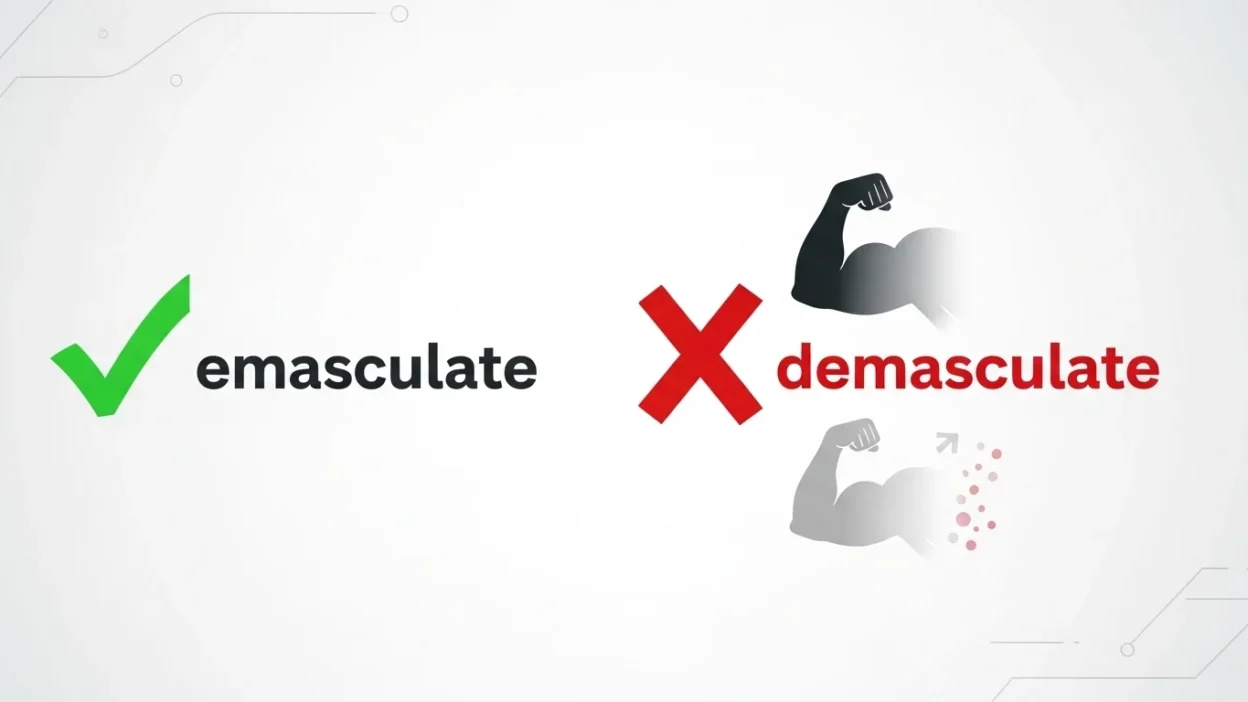
Quick Answer
- Emasculate ✅ correct
- Demasculate ❌ incorrect (nonstandard/rare)
👉 In short:
Always use “emasculate.”
What Does “Emasculate” Mean?
Emasculate is a verb that means:
- To weaken or deprive someone of strength, power, or confidence
- Traditionally, to remove male characteristics (literal or figurative)
Common Uses of Emasculate
- Emotional or psychological weakening
- Reducing strength or effectiveness
- Figurative use in discussions about confidence or authority
Examples of Emasculate
- The criticism seemed to emasculate his confidence.
- Harsh rules can emasculate creativity.
- He felt emasculated by the constant pressure.
Synonyms for Emasculate
- Weaken
- Undermine
- Diminish
- Humble
What About “Demasculate”?
Demasculate is not a standard English word. It may appear occasionally, but it is considered:
- Incorrect or nonstandard
- A mistaken variation of emasculate
❌ Incorrect: The comment demasculated him.
✅ Correct: The comment emasculated him.
Why Is “Emasculate” Correct?
The word comes from Latin roots:
- e- (out of)
- masculus (male)
👉 So the correct form developed as emasculate, not demasculate.
Emasculate vs Demasculate: Key Differences
| Feature | Emasculate | Demasculate |
|---|---|---|
| Spelling | Correct | Incorrect |
| Usage | Standard English | Not accepted |
| Meaning | Weaken or remove strength | ❌ No valid standard meaning |
| Example | It emasculated his authority | ❌ It demasculated his authority |
Simple Trick to Remember
Here’s an easy way to get it right:
👉 “E-masculate” starts with E, like “erase strength”
Think:
- E = remove or weaken
- So → emasculate
Common Mistakes to Avoid
1. Adding “de-” Instead of “e-”
❌ Incorrect: demasculate
✅ Correct: emasculate
2. Assuming “de-” Makes It Correct
Not all words follow the de- prefix pattern.
3. Using Rare or Incorrect Variants
Stick to the standard form for clear communication.
Real-Life Examples
Emotional Context
- The remark emasculated his confidence.
Professional Context
- Poor leadership can emasculate a team’s morale.
Figurative Use
- The policy emasculated innovation.
American vs British English Differences
There is no difference:
- Both American and British English use emasculate
- Demasculate is incorrect in both
Related Words and LSI Keywords
To deepen your understanding:
- Emasculated meaning
- Undermine vs weaken
- Confidence loss
- Emotional impact words
- English vocabulary mistakes
- Prefix usage in English
FAQs
Is demasculate a real word?
No, it is not accepted in standard English.
What is the correct word: emasculate or demasculate?
The correct word is emasculate.
What does emasculate mean?
It means to weaken or reduce strength or confidence.
Can emasculate be used figuratively?
Yes, it is often used in a figurative sense.
Is emasculate offensive?
It can be sensitive depending on context, so use carefully.
Are there synonyms for emasculate?
Yes, such as weaken or undermine.
Is there a difference in UK and US English?
No, usage is the same.
How can I remember the correct spelling?
Think: “E removes strength” → emasculate.
Summary
The difference between emasculate vs demasculate is simple: only one is correct. Emasculate is the proper verb used to describe weakening or diminishing strength, while demasculate is a nonstandard and incorrect form.
Using the correct word ensures clarity and accuracy in your writing.
Final Thoughts
English can be tricky when similar-looking words appear, but sticking to standard forms helps avoid confusion. Remember that emasculate is the correct and accepted term, while demasculate should be avoided.
With practice, choosing the right word becomes easy helping you communicate more clearly and confidently.

Michael Brown is a contributor and author at BibliHub.com, where he produces insightful and research-oriented articles. He values depth, accuracy, and structure in his writing, ensuring that readers receive meaningful and well-supported information. Michael’s work is designed to inform, educate, and provide long-term value to readers interested in learning and exploration.