The phrase “take it or leave it” is a common English idiom used in everyday conversation, business, and negotiations. While it sounds simple, it carries a strong tone and specific meaning.
This complete guide will help you understand take it or leave it clearly, including its meaning, usage, tone, and real-life examples.
Quick Answer
👉 “Take it or leave it” means:
Accept something as it is, or reject it—no changes allowed.
What Does “Take It or Leave It” Mean?
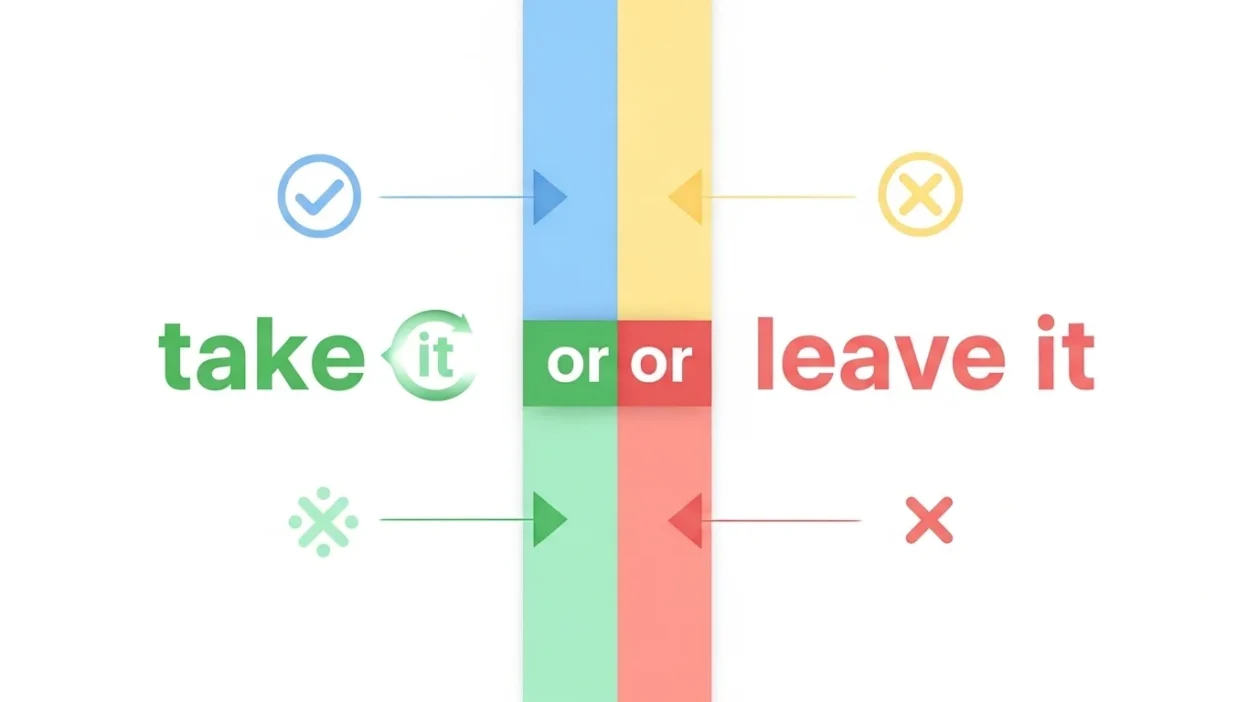
The idiom “take it or leave it” expresses a final offer or decision where no negotiation is possible.
- “Take it” → accept the offer
- “Leave it” → reject the offer
👉 The speaker is saying:
“This is my final position. I won’t change it.”
When to Use “Take It or Leave It”
1. In Negotiations
Used when someone is not willing to bargain further.
Example:
- This is my final price—take it or leave it.
2. In Everyday Situations
Used when offering something without flexibility.
Example:
- I can give you a ride now, take it or leave it.
3. In Arguments or Firm Decisions
Shows a strong, non-negotiable stance.
Example:
- That’s my decision—take it or leave it.
Tone and Feeling
This phrase can carry different tones depending on how it’s used:
- ✔ Confident → standing firm
- ⚠️ Blunt → direct, not soft
- ❌ Rude (sometimes) → if used harshly
👉 It’s best used carefully, especially in polite or professional settings.
Take It or Leave It: Key Characteristics
| Feature | Description |
|---|---|
| Type | Idiom |
| Meaning | Final, non-negotiable offer |
| Tone | Firm / direct |
| Usage | Common in speech and negotiation |
Simple Trick to Remember
👉 Think of it as a yes-or-no situation
- No discussion
- No changes
- Just a decision
Common Mistakes to Avoid
1. Using It in Polite Situations
❌ Please take it or leave it
👉 Sounds contradictory and harsh
2. Overusing It
Can make you sound rude or uncooperative.
3. Misunderstanding Tone
It’s not a friendly phrase—it’s firm and final.
Real-Life Examples
Business Context
- The offer stands as it is—take it or leave it.
Casual Conversation
- I’m ordering pizza, take it or leave it.
Workplace
- This is the deadline—take it or leave it.
Similar Expressions
Here are phrases with similar meanings:
- Final offer
- No negotiation
- It’s non-negotiable
- That’s my last word
- No strings attached
Opposite Expressions
- Let’s negotiate
- Open to discussion
- Flexible offer
- We can adjust
American vs British English
There is no difference:
- The phrase “take it or leave it” is used the same way in both US and UK English
FAQs
What does “take it or leave it” mean?
It means accept something as it is or reject it.
Is it rude to say “take it or leave it”?
It can sound rude depending on tone and context.
Where is this phrase commonly used?
In negotiations, business, and everyday situations.
Can I use it in professional emails?
Not recommended—it may sound too harsh.
Is it formal or informal?
Mostly informal or direct.
Is this a common idiom?
Yes, very common.
Summary
The phrase “take it or leave it” is a powerful idiom used to present a final, non-negotiable option. It clearly shows that the speaker is not open to discussion or changes.
Final Thoughts
“Take it or leave it” is useful when you want to set clear boundaries, but it should be used carefully. While it shows confidence and certainty, overusing it can make your tone seem too harsh or uncooperative.
Used wisely, it’s a strong and effective expression in English communication.

Michael Brown is a contributor and author at BibliHub.com, where he produces insightful and research-oriented articles. He values depth, accuracy, and structure in his writing, ensuring that readers receive meaningful and well-supported information. Michael’s work is designed to inform, educate, and provide long-term value to readers interested in learning and exploration.