Confused between unselect and deselect? You’re not alone. Both appear in digital interfaces and everyday language, but one is clearly preferred in standard English.
This guide explains unselect vs deselect, with meanings, examples, and when to use each.
Quick Answer
- Deselect ✅ correct and widely used
- Unselect ⚠️ less common, informal or UI-specific
👉 In short:
Use “deselect” in most situations
What Does “Deselect” Mean?
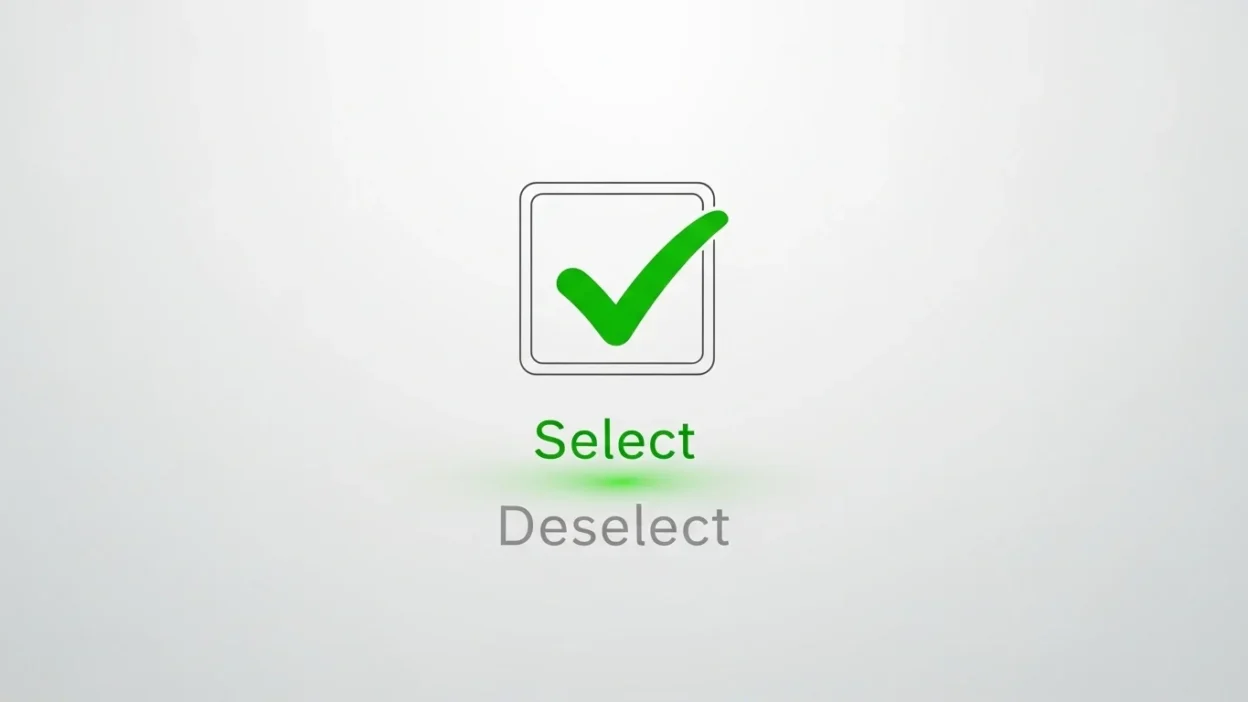
Deselect is a verb that means to remove a selection or cancel a chosen option.
Common Uses of Deselect
- Computers and apps
- Forms and checkboxes
- Editing or design tools
Examples of Deselect
- Click the box again to deselect it.
- You can deselect multiple items at once.
- Press Ctrl to deselect the option.
Synonyms for Deselect
- Uncheck
- Remove selection
- Clear selection
What Does “Unselect” Mean?
Unselect can mean the same thing—to remove a selection—but it is:
- Less common
- Sometimes used in informal contexts
- Occasionally seen in software interfaces
Examples of Unselect
- You can unselect items by clicking again.
👉 While understandable, it’s not the preferred standard term.
Unselect vs Deselect: Key Differences
| Feature | Deselect | Unselect |
|---|---|---|
| Usage | Standard and widely accepted | Less common |
| Formality | Suitable for all contexts | Informal or UI-specific |
| Meaning | Remove selection | Same meaning |
| Preference | Strongly preferred | Rarely preferred |
Simple Trick to Remember
Here’s an easy way to choose:
👉 Use “de-” for reversing an action
Think:
- select → deselect
- activate → deactivate
So:
✔ deselect follows common English patterns
Common Mistakes to Avoid
1. Using “Unselect” in Formal Writing
❌ Less ideal: Please unselect the option.
✅ Better: Please deselect the option.
2. Mixing Terms in the Same Context
Be consistent—choose one term, preferably deselect.
3. Assuming Both Are Equal
While both exist, deselect is more widely accepted.
Real-Life Examples
Technology Context
- To remove the option, click again to deselect it.
Instructions
- Deselect all items before proceeding.
Software UI (Occasional)
- Unselect the file if you made a mistake.
American vs British English Differences
There is no major difference:
- Both American and British English prefer deselect
- Unselect is less common in both
Related Words and LSI Keywords
To deepen your understanding:
- Select vs deselect
- Uncheck vs deselect
- Activate vs deactivate
- English prefixes (un- vs de-)
- UI terminology
- Common vocabulary choices
FAQs
Which is correct: unselect or deselect?
Deselect is the correct and preferred term.
Is unselect wrong?
Not completely wrong, but it is less standard.
Which one should I use in writing?
Use deselect, especially in formal or professional contexts.
Why is deselect more common?
Because it follows common prefix patterns like deactivate.
Is unselect used in software?
Sometimes, but less often than deselect.
Do they mean the same thing?
Yes, both mean removing a selection.
Is there a difference in UK and US English?
No, both prefer deselect.
How can I remember the correct word?
Think: select → deselect (reverse action).
Summary
The difference between unselect vs deselect is mainly about usage. Both mean removing a selection, but deselect is the standard and widely accepted term, while unselect is less common and often informal.
Using deselect ensures your language sounds clear and professional.
Final Thoughts
In English, prefixes matter. While un- and de- can both suggest reversal, de- is the more natural choice for actions like select. That’s why deselect is the preferred word in most contexts.
Choosing the standard term helps your communication stay consistent, clear, and widely understood.

Michael Brown is a contributor and author at BibliHub.com, where he produces insightful and research-oriented articles. He values depth, accuracy, and structure in his writing, ensuring that readers receive meaningful and well-supported information. Michael’s work is designed to inform, educate, and provide long-term value to readers interested in learning and exploration.