Confused between brite and bright? You’re not alone. These two words sound exactly the same, but only one is correct in standard English writing.
In this guide, you’ll learn the difference between brite vs bright, when to use each, and how to avoid this common spelling mistake.
Quick Answer
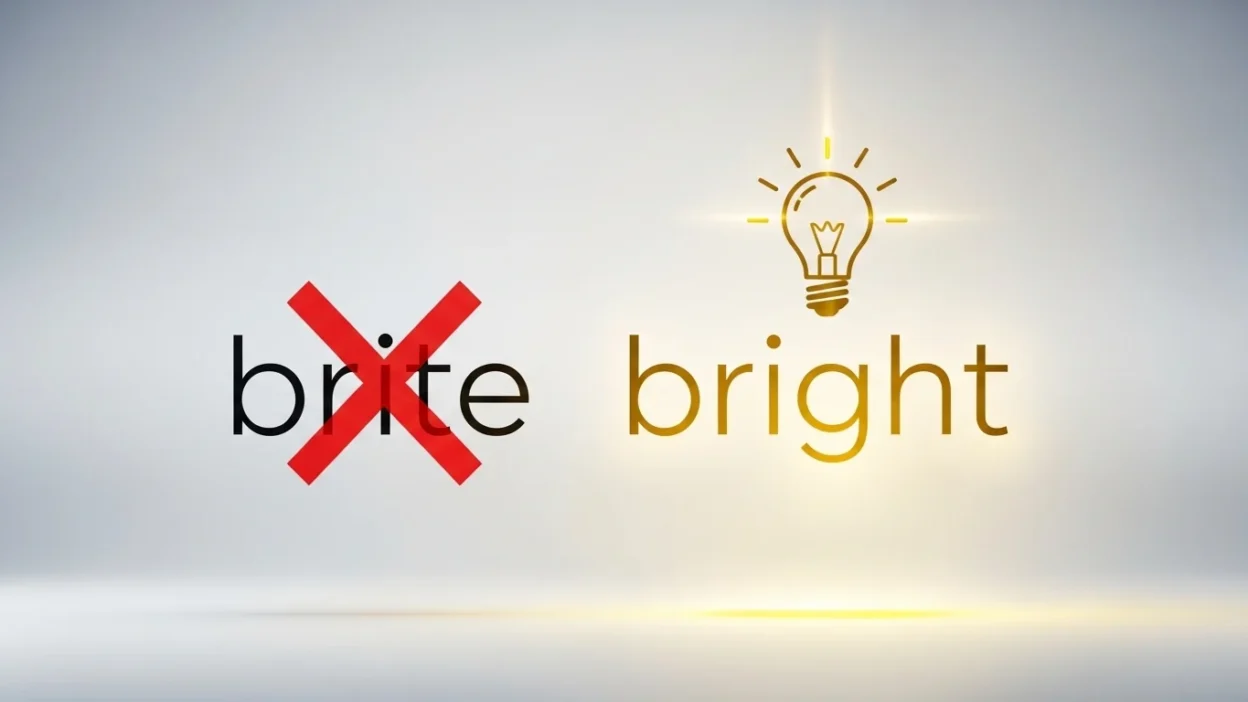
- Bright ✅ is correct
- Brite ❌ is incorrect (in standard English)
👉 In short:
Always use “bright.”
What Does “Bright” Mean?
Bright is a common English adjective that describes something that is:
- Full of light
- Shining or vivid
- Intelligent or cheerful
Common Uses of Bright
- Light and color
- Intelligence
- Mood or personality
Examples of Bright
- The sun is very bright today.
- She is a bright student.
- He wore a bright yellow shirt.
- The future looks bright.
Synonyms for Bright
- Shiny
- Brilliant
- Smart
- Cheerful
What About “Brite”?
Brite is not a standard English word. It is usually:
- A misspelling of bright
- Or used in brand names and informal contexts
Where You Might See “Brite”
- Product names (e.g., cleaning brands)
- Marketing or stylized spelling
👉 Example (branding):
- CleanBrite (brand name)
⚠️ In normal writing, avoid using brite.
Brite vs Bright: Key Differences
| Feature | Bright | Brite |
|---|---|---|
| Spelling | Correct | Incorrect (standard English) |
| Usage | Everyday language | Branding or informal |
| Meaning | Light, intelligent, vivid | ❌ No standard meaning |
| Example | A bright light | ❌ A brite light |
Simple Trick to Remember
Here’s an easy way to get it right:
👉 Bright has “gh” like “light”
So:
- light → bright
- both relate to brightness
Common Mistakes to Avoid
1. Using “Brite” in Writing
❌ Incorrect: The room is very brite.
✅ Correct: The room is very bright.
2. Copying Brand Spellings
Brand names often break spelling rules—don’t follow them in formal writing.
3. Relying Only on Sound
Both words sound the same, but spelling matters.
Real-Life Examples
Everyday Use
- The stars are bright tonight.
Academic Context
- She has a bright future ahead.
Descriptive Writing
- The painting uses bright colors.
American vs British English Differences
There is no difference:
- Both American and British English use bright
- Brite is incorrect in both (except branding)
Related Words and LSI Keywords
To strengthen your understanding:
- Bright meaning
- Common spelling mistakes
- Light vs bright
- English adjectives
- Homophones in English
- Correct spelling tips
FAQs
Is brite a correct spelling?
No, brite is not correct in standard English.
What is the correct spelling: brite or bright?
The correct spelling is bright.
Why do people write brite?
Because it sounds the same and appears in brand names.
Can I use brite in formal writing?
No, always use bright.
What does bright mean?
It means full of light, intelligent, or cheerful.
Are there exceptions?
Only in brand names or stylized writing.
Is this the same in UK and US English?
Yes, there is no difference.
How can I remember the correct spelling?
Think: bright = light (both have “gh”).
Summary
The difference between brite vs bright is simple: only one is correct. Bright is the proper spelling used to describe light, intelligence, or vividness, while brite is a common mistake or branding variation.
Using the correct spelling ensures your writing is clear and professional.
Final Thoughts
Spelling mistakes like brite vs bright are easy to make because they sound identical. However, remembering small patterns like the connection between bright and light—can help you avoid errors.
With practice, choosing the correct spelling becomes natural, improving both your confidence and clarity in English.

Sarah Davis is a content writer at BibliHub.com, focused on delivering clear, organized, and easy-to-read articles. Her writing prioritizes simplicity without losing accuracy, helping readers quickly grasp key ideas. Sarah is dedicated to creating content that is informative, reliable, and suitable for a wide audience seeking practical knowledge.