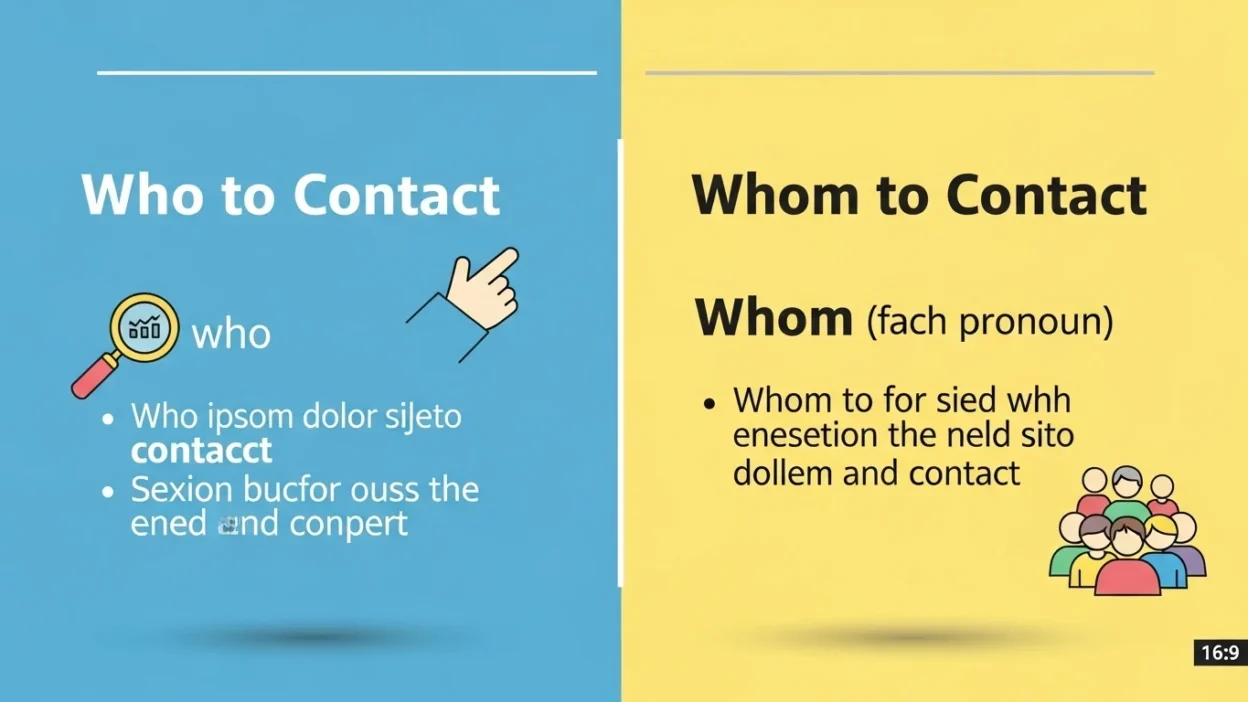
If you’re unsure whether to say who to contact or whom to contact, you’re not alone. This is one of the most common grammar questions in English—and the answer depends on sentence structure and formality.
Quick Answer
- Who to contact ✅ correct (modern, widely used)
- Whom to contact ✅ correct (formal, traditional)
👉 In short:
Use “who to contact” in everyday English
What Does “Who to Contact” Mean?
Who to contact is the modern, natural way to ask about the right person.
When to Use “Who to Contact”
- Everyday conversation
- Emails and casual writing
- Most modern content
Examples of Who to Contact
- Do you know who to contact?
- Tell me who to contact for support.
- I’m not sure who to contact about this issue.
👉 It sounds natural and conversational.
What Does “Whom to Contact” Mean?
Whom to contact is grammatically correct and more formal.
When to Use “Whom to Contact”
- Formal writing
- Official documents
- Academic or professional tone
Examples of Whom to Contact
- Please advise whom to contact for assistance.
- We need to know whom to contact in emergencies.
👉 It sounds more formal and traditional.
Who vs Whom: The Basic Rule
- Who → subject (does the action)
- Whom → object (receives the action)
In this phrase:
- Contact whom → whom is the object of the verb contact
👉 So technically, “whom to contact” is grammatically precise.
Who to Contact vs Whom to Contact: Key Differences
| Feature | Who to Contact | Whom to Contact |
|---|---|---|
| Usage | Common, modern | Formal, traditional |
| Grammar | Informally correct | Grammatically precise |
| Tone | Natural | Formal |
| Preference | Widely preferred | Less common today |
Simple Trick to Remember
Here’s an easy way:
👉 Replace with he/him
- If him fits → use whom
- If he fits → use who
Example:
- Contact him → ✔ whom to contact
Common Mistakes to Avoid
1. Overusing “Whom”
❌ Whom do you think will help?
✅ Who do you think will help?
2. Avoiding “Whom” Completely
It’s still useful in formal writing.
3. Sounding Too Formal in Casual Contexts
Use who in everyday speech.
Real-Life Examples
Casual Conversation
- Do you know who to contact?
Workplace Email
- Let me know who to contact for support.
Formal Document
- Please specify whom to contact in case of emergency.
American vs British English Differences
- American English → strongly prefers who
- British English → uses whom slightly more, but still declining
👉 Overall, “who to contact” is standard everywhere today.
Related Words and LSI Keywords
To deepen your understanding:
- Who vs whom rule
- Subject vs object pronouns
- English grammar tips
- Formal vs informal writing
- Common grammar mistakes
- Pronoun usage
FAQs
Which is correct: who to contact or whom to contact?
Both are correct, but who to contact is more common.
Is whom to contact wrong?
No, it’s grammatically correct but more formal.
Why is who more common?
Because modern English favors simpler, natural forms.
When should I use whom?
In formal or professional writing.
How do I test who vs whom?
Use the he/him trick.
Is whom disappearing from English?
It’s becoming less common but still used in formal contexts.
Is this the same in UK and US English?
Yes, though the US uses “who” more often.
Which should I use in emails?
Who to contact is usually best.
Summary
The difference between who to contact vs whom to contact comes down to formality and grammar precision. Whom to contact is technically correct, but who to contact is more natural and widely used today.
Choosing the right form depends on your tone and audience.
Final Thoughts
Language evolves, and while whom still has its place, who has become the go-to choice in modern English. Understanding both gives you flexibility to match the situation.
In most cases, who to contact will sound clear, natural, and appropriate.

Sarah Davis is a content writer at BibliHub.com, focused on delivering clear, organized, and easy-to-read articles. Her writing prioritizes simplicity without losing accuracy, helping readers quickly grasp key ideas. Sarah is dedicated to creating content that is informative, reliable, and suitable for a wide audience seeking practical knowledge.