
Confused between introduction to and introduction of? You’re not alone. Both phrases are correct, but they’re used in different contexts and choosing the wrong one can make your sentence sound unnatural.
This guide explains introduction to vs introduction of in a clear, simple way with examples and tips.
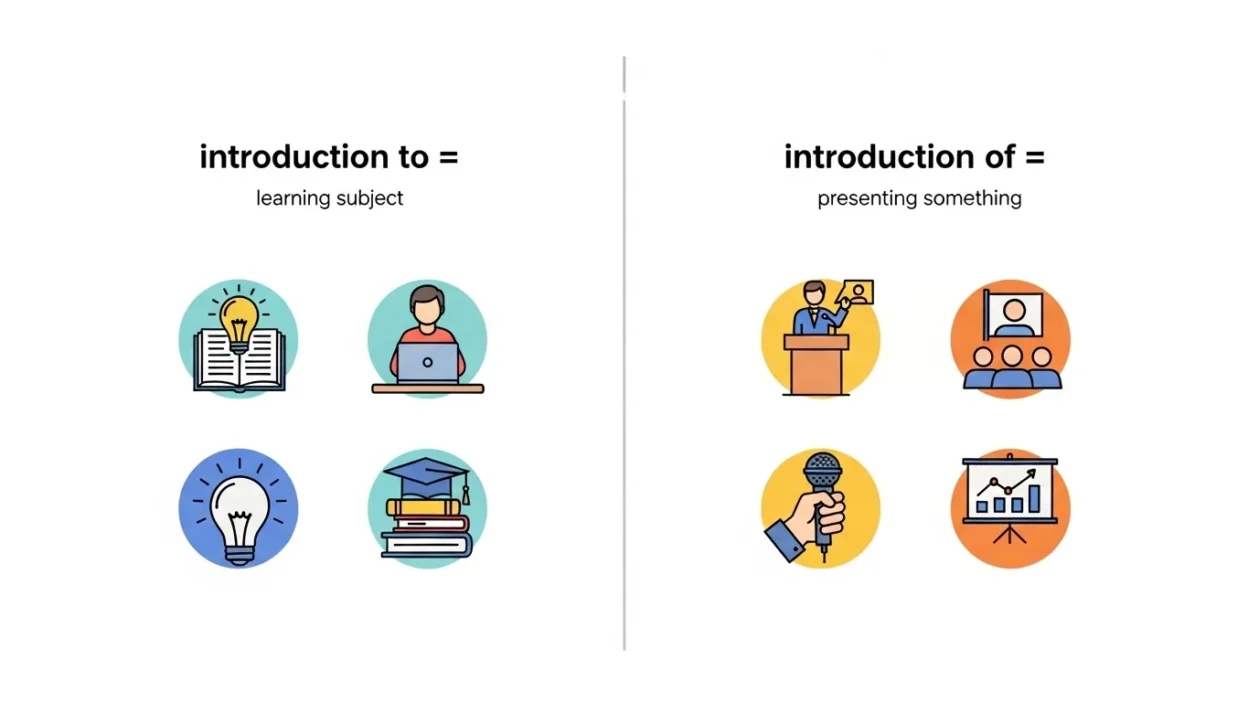
Quick Answer
- Introduction to → used for topics, subjects, or learning
- Introduction of → used for presenting or bringing something/someone
👉 In short:
To = about / learning
Of = presenting / bringing in
What Does “Introduction To” Mean?
Introduction to is used when referring to a subject, topic, or area of learning. It means giving a basic overview or first exposure.
When to Use “Introduction To”
- Courses or books
- Topics or subjects
- Learning something new
Examples of Introduction To
- This is an introduction to biology.
- She wrote a book as an introduction to coding.
- The course offers an introduction to psychology.
👉 Think of it as: starting to learn about something
What Does “Introduction Of” Mean?
Introduction of is used when referring to bringing something or someone into use, attention, or a situation.
When to Use “Introduction Of”
- Presenting a person
- Launching a product or idea
- Bringing something new
Examples of Introduction Of
- The introduction of new rules improved safety.
- The introduction of the speaker was brief.
- The company announced the introduction of a new product.
👉 Think of it as: bringing something into a situation
Introduction To vs Introduction Of: Key Differences
| Feature | Introduction To | Introduction Of |
|---|---|---|
| Meaning | About a subject | Bringing or presenting |
| Usage | Learning, topics | Events, people, changes |
| Example | Intro to math | Introduction of a new policy |
| Focus | Knowledge | Action or event |
Simple Trick to Remember
Here’s an easy way to choose:
👉 To = toward knowledge
👉 Of = ownership or bringing in
Think:
- Introduction to something → learning it
- Introduction of something → presenting it
Common Mistakes to Avoid
1. Using “Of” for Subjects
❌ Incorrect: Introduction of physics
✅ Correct: Introduction to physics
2. Using “To” for Launching Something
❌ Incorrect: Introduction to a new product
✅ Correct: Introduction of a new product
3. Ignoring Context
Always ask:
👉 Is it about learning or presenting?
Real-Life Examples
Education
- This is an introduction to English grammar.
Business
- The introduction of new technology improved efficiency.
Events
- The introduction of the guest speaker was short.
American vs British English Differences
There is no difference:
- Both American and British English use these phrases the same way
- The choice depends on meaning, not region
Related Words and LSI Keywords
To deepen your understanding:
- Intro to vs intro of
- Prepositions in English
- Grammar usage rules
- Learning vs presenting
- English phrase differences
- Academic writing tips
FAQs
What is the difference between introduction to and introduction of?
Introduction to is about learning a subject, while introduction of is about presenting something.
Can they be used interchangeably?
No, they have different meanings.
Which is used for courses?
Use introduction to.
Which is used for new products?
Use introduction of.
Is “introduction to a person” correct?
Not usually—use introduction of a person or introduction to someone (different structure).
Is this the same in UK and US English?
Yes, the rule is the same.
How can I remember the difference?
Think: to = learning, of = presenting.
What is more common?
Both are common, depending on context.
Summary
The difference between introduction to vs introduction of comes down to purpose. Introduction to is used for learning or topics, while introduction of is used for presenting or bringing something into a situation.
Understanding this helps you use the correct phrase in both writing and speaking.
Final Thoughts
Prepositions like to and of may seem small, but they can change the meaning of a sentence. By focusing on whether you mean learning about something or introducing something, you can easily choose the right phrase.
With practice, this distinction becomes natural helping you communicate more clearly and confidently.

Michael Brown is a contributor and author at BibliHub.com, where he produces insightful and research-oriented articles. He values depth, accuracy, and structure in his writing, ensuring that readers receive meaningful and well-supported information. Michael’s work is designed to inform, educate, and provide long-term value to readers interested in learning and exploration.