Confused between imitated and intimated? These words look and sound somewhat similar, but they have very different meanings. Mixing them up can change your sentence completely.
This guide will clearly explain imitated vs intimated, with simple definitions, examples, and tips to help you use them correctly.
Quick Answer
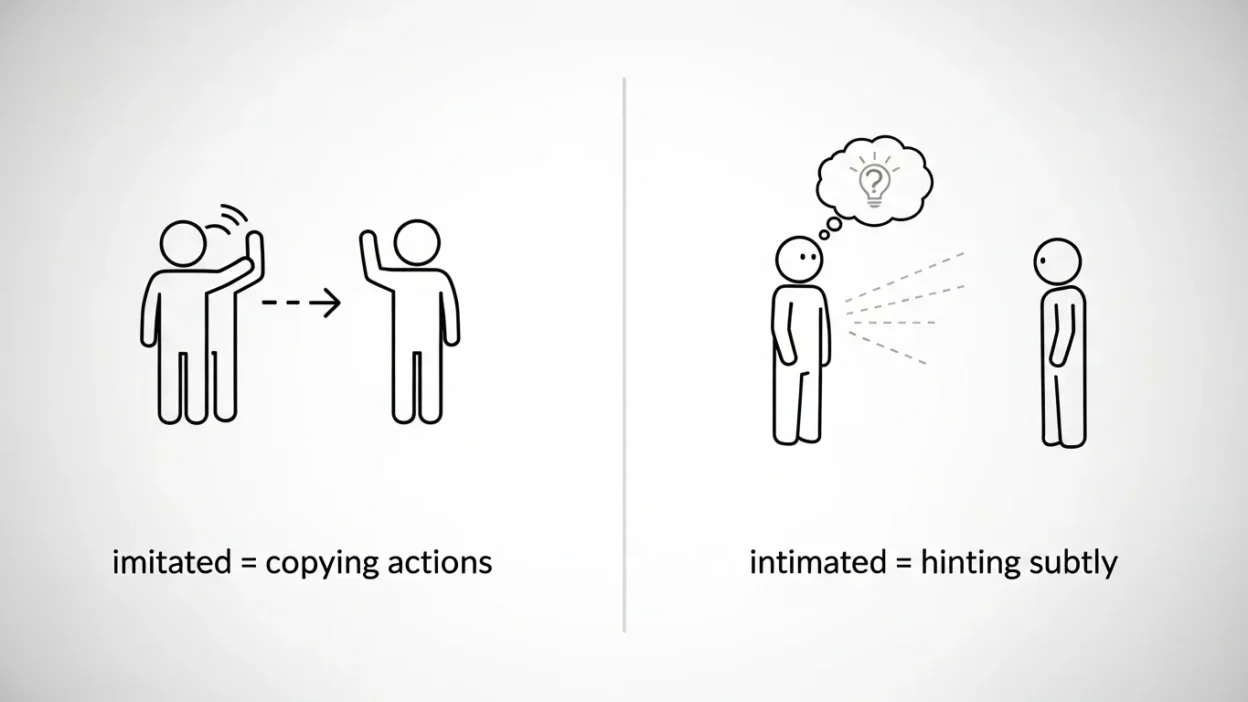
- Imitated → copied or mimicked
- Intimated → hinted or suggested indirectly
👉 In short:
Imitated = copy
Intimated = hint
What Does “Imitated” Mean?
Imitated is the past tense of imitate. It means to copy someone’s actions, behavior, or style.
Common Uses of Imitated
- Copying behavior
- Mimicking speech or actions
- Learning by copying
Examples of Imitated
- The child imitated his teacher’s voice.
- She imitated the artist’s style.
- He imitated his favorite actor.
Synonyms for Imitated
- Copied
- Mimicked
- Replicated
- Emulated
What Does “Intimated” Mean?
Intimated is the past tense of intimate (verb). It means to suggest or hint at something indirectly.
Common Uses of Intimated
- Giving subtle hints
- Suggesting something without saying it directly
- Formal or literary contexts
Examples of Intimated
- He intimated that he might resign.
- She intimated her concerns during the meeting.
- The report intimated possible risks.
👉 This word is more formal and less common in everyday speech.
Synonyms for Intimated
- Suggested
- Implied
- Hinted
- Indicated
Imitated vs Intimated: Key Differences
| Feature | Imitated | Intimated |
|---|---|---|
| Meaning | Copied or mimicked | Hinted or suggested |
| Usage | Common in everyday language | More formal or literary |
| Context | Actions, behavior, style | Ideas, feelings, intentions |
| Example | He imitated her voice | He intimated his concerns |
Simple Trick to Remember
Here’s an easy way to tell them apart:
👉 Imitate = copy (sounds like “image”)
👉 Intimate = hint (subtle meaning)
Think:
- Imitated → doing the same thing
- Intimated → saying something indirectly
Common Mistakes to Avoid
1. Using “Intimated” When You Mean Copy
❌ Incorrect: He intimated his friend’s voice.
✅ Correct: He imitated his friend’s voice.
2. Using “Imitated” for Hinting
❌ Incorrect: She imitated that she was unhappy.
✅ Correct: She intimated that she was unhappy.
3. Ignoring Context
Ask yourself:
👉 Is it copying or hinting?
Real-Life Examples
Everyday Use
- The child imitated his parents.
Formal Context
- The manager intimated possible changes.
Learning Situations
- Students often imitate good examples.
American vs British English Differences
There is no difference:
- Both American and British English use these words the same way
- Meanings and usage are identical
Related Words and LSI Keywords
To deepen your understanding:
- Imitate vs emulate
- Intimate meaning (verb)
- Copy vs suggest
- English vocabulary confusion
- Similar sounding words
- Common word mistakes
FAQs
What is the difference between imitated and intimated?
Imitated means copied, while intimated means hinted.
Is intimated a common word?
No, it is more formal and less commonly used.
Can I use imitated in formal writing?
Yes, it is common in both formal and informal contexts.
What does intimated mean in simple terms?
It means to suggest something indirectly.
Are these words interchangeable?
No, they have very different meanings.
How can I remember the difference?
Think: imitated = copy, intimated = hint.
Is there a difference in UK and US English?
No, usage is the same.
Which word is more common?
Imitated is more commonly used.
Summary
The difference between imitated vs intimated is clear once you understand their meanings. Imitated refers to copying actions or behavior, while intimated refers to suggesting something indirectly.
Using the correct word ensures your message is clear and accurate.
Final Thoughts
Words like imitated and intimated can be confusing because of their similar spelling, but their meanings are very different. By focusing on whether you mean copying or hinting, you can easily choose the right word.
With practice, this distinction becomes natural helping you communicate more clearly and confidently.

Sarah Davis is a content writer at BibliHub.com, focused on delivering clear, organized, and easy-to-read articles. Her writing prioritizes simplicity without losing accuracy, helping readers quickly grasp key ideas. Sarah is dedicated to creating content that is informative, reliable, and suitable for a wide audience seeking practical knowledge.