If you’ve ever wondered whether to use passerbyers, passersby, or passerby, you’re not alone. This is one of those tricky English words where the plural doesn’t follow the usual pattern.
Let’s break it down simply so you always choose the correct form.
Quick Answer
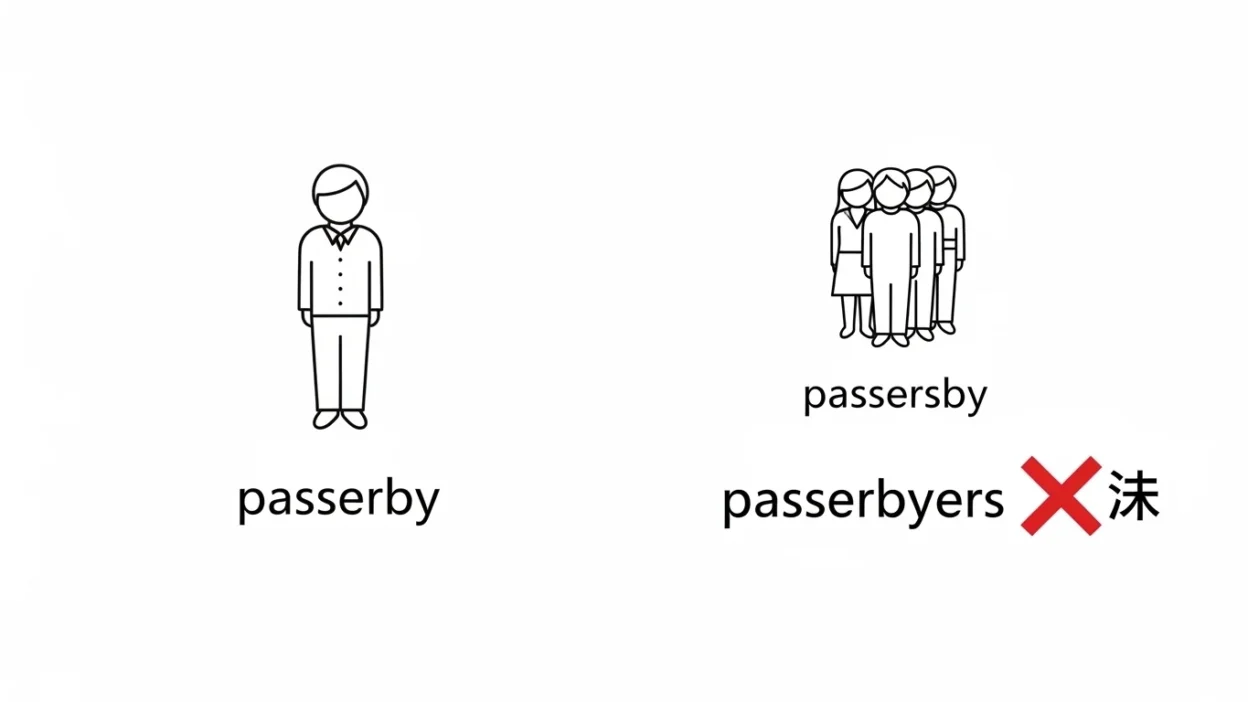
- Passerby ✅ singular (one person)
- Passersby ✅ plural (more than one person)
- Passerbyers ❌ incorrect
👉 In short:
One = passerby
Many = passersby
What Does “Passerby” Mean?
Passerby is a noun that refers to a person who is walking past a place or event.
Examples of Passerby
- A passerby helped the injured man.
- The passerby stopped to watch the performance.
👉 It describes one person passing by.
What Does “Passersby” Mean?
Passersby is the correct plural form of passerby. It refers to multiple people walking past.
Why Is It “Passersby”?
Because the main noun is passer, not by.
So the plural is formed like this:
- passer → passers
- by → passersby
Examples of Passersby
- Several passersby witnessed the accident.
- The street performer attracted many passersby.
Why Is “Passerbyers” Incorrect?
Passerbyers is not a real word in English. It’s a common mistake caused by trying to pluralize the whole word.
❌ Incorrect: Many passerbyers stopped.
✅ Correct: Many passersby stopped.
Passerby vs Passersby: Key Differences
| Feature | Passerby | Passersby |
|---|---|---|
| Number | Singular | Plural |
| Meaning | One person passing by | Multiple people passing by |
| Example | A passerby helped | Passersby helped |
Simple Trick to Remember
Here’s an easy way to get it right:
👉 Focus on the main word: passer
- One → passer + by = passerby
- Many → passers + by = passersby
Think:
“The ‘passer’ changes, not ‘by’.”
Common Mistakes to Avoid
1. Adding “-ers” at the End
❌ Incorrect: passerbyers
✅ Correct: passersby
2. Treating “By” as the Main Word
The key noun is passer, not by.
3. Overthinking the Plural
Just pluralize passer—not the whole word.
Real-Life Examples
Everyday Situations
- A passerby called for help.
- Passersby gathered around the scene.
News or Reports
- Several passersby reported the incident.
Descriptive Writing
- Curious passersby stopped to watch.
American vs British English Differences
There is no difference:
- Both American and British English use passerby and passersby
- Passerbyers is incorrect in both
Related Words and LSI Keywords
To deepen your understanding:
- Compound nouns plural rules
- Attorney general vs attorneys general
- Mother-in-law vs mothers-in-law
- English plural forms
- Common grammar mistakes
- Noun formation rules
FAQs
What is the correct plural of passerby?
The correct plural is passersby.
Is passerbyers a real word?
No, it is incorrect.
Why is it passersby and not passerbies?
Because passer is the main noun, so it becomes passers.
What does passerby mean?
It means a person walking past a place.
Can I say “a passersby”?
No, use a passerby for singular.
Is this rule common in English?
Yes, many compound nouns follow similar patterns.
Is there a difference in UK and US English?
No, usage is the same.
How can I remember it easily?
Think: pluralize the main word → passer → passersby.
Summary
The difference between passerby, passersby, and passerbyers is simple once you understand the structure. Passerby is singular, passersby is the correct plural, and passerbyers is incorrect.
Focusing on the main noun (passer) makes it easy to form the correct plural.
Final Thoughts
English compound nouns can be tricky, but rules like this become much easier once you know where to look. By remembering that only the main word changes, you can confidently use passerby and passersby correctly.
With practice, this pattern will feel natural helping you write more accurately and professionally.

John Miller is a content author at BibliHub.com, known for creating clear, well-structured, and reader-friendly articles. He focuses on breaking down complex topics into simple, practical explanations that are easy to understand for a global audience. John emphasizes accuracy, research-based information, and logical presentation, making his work reliable and accessible for readers seeking trustworthy knowledge.