Confused between propose and purpose? You’re not alone. These two words look similar but have completely different meanings and uses one is a verb, and the other is a noun (and sometimes a verb in a different sense).
This guide will clearly explain propose vs purpose with simple definitions, examples, and easy tips.
Quick Answer
- Propose → to suggest or put forward an idea (verb)
- Purpose → reason or intention behind something (noun)
👉 In short:
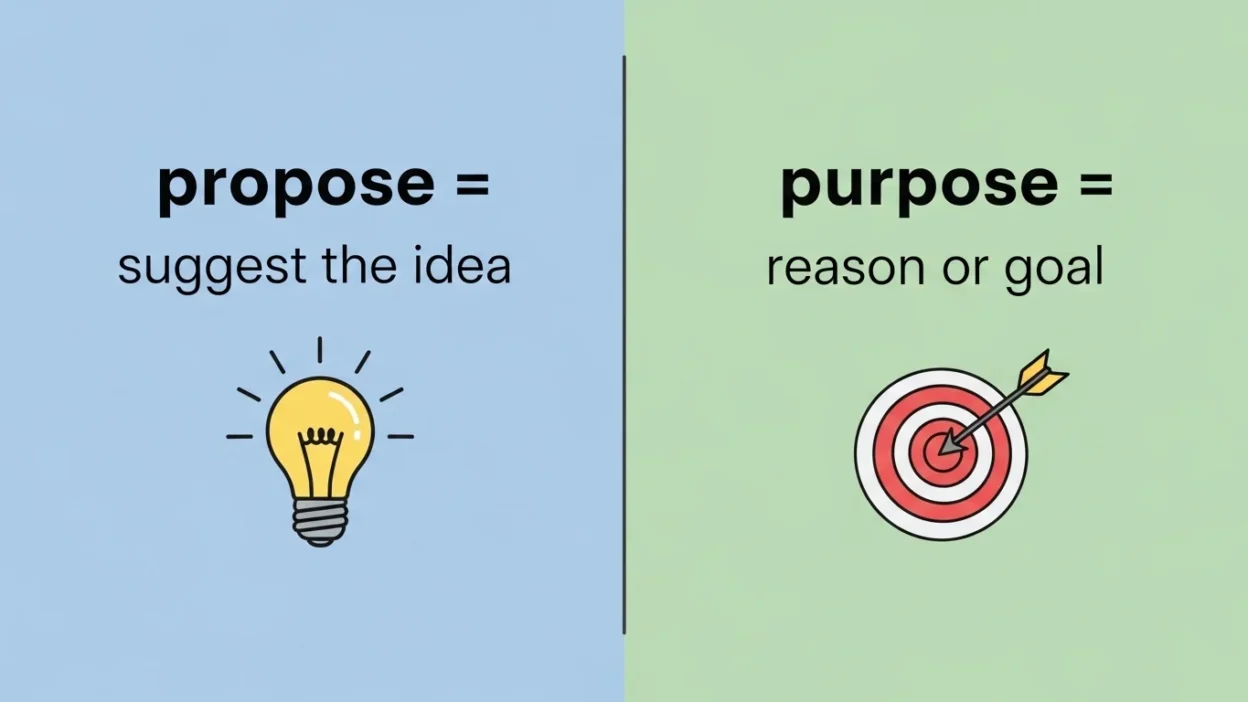
Propose = suggest
Purpose = reason
What Does “Propose” Mean?
Propose is a verb that means to suggest, recommend, or put forward an idea or plan.
Common Uses of Propose
- Suggesting ideas or plans
- Making formal proposals
- Asking someone to marry you
Examples of Propose
- She will propose a new plan tomorrow.
- They proposed changes to the policy.
- He proposed to her last night.
Synonyms for Propose
- Suggest
- Recommend
- Offer
- Present
What Does “Purpose” Mean?
Purpose is mainly a noun that means the reason why something is done or exists.
Common Uses of Purpose
- Explaining intention
- Describing goals
- Giving meaning to actions
Examples of Purpose
- The purpose of this meeting is to plan ahead.
- He found a new purpose in life.
- This tool serves an important purpose.
“Purpose” as a Verb (Less Common)
It can also mean to intend or plan (formal usage).
- She purposed to finish the project early.
👉 This verb form is rare in everyday English.
Synonyms for Purpose
- Goal
- Aim
- Intention
- Objective
Propose vs Purpose: Key Differences
| Feature | Propose | Purpose |
|---|---|---|
| Part of Speech | Verb | Noun (mainly) |
| Meaning | To suggest or present | Reason or intention |
| Usage | Actions and ideas | Goals and meanings |
| Example | I propose a solution | The purpose is clear |
Simple Trick to Remember
Here’s an easy way to keep them straight:
👉 Propose = present an idea
👉 Purpose = point or reason
Or think:
- You propose a plan
- The plan has a purpose
Common Mistakes to Avoid
1. Using “Purpose” Instead of “Propose”
❌ Incorrect: I will purpose a new idea.
✅ Correct: I will propose a new idea.
2. Using “Propose” Instead of “Purpose”
❌ Incorrect: The propose of this meeting is clear.
✅ Correct: The purpose of this meeting is clear.
3. Confusing Similar Spelling
They look alike, but their meanings are very different.
Real-Life Examples
Business Context
- They proposed a new strategy.
- The purpose of the strategy is growth.
Daily Conversation
- I want to propose a solution.
- What is the purpose of this task?
Formal Writing
- The study proposes a new theory.
- The purpose of the study is explained clearly.
American vs British English Differences
There is no difference:
- Both American and British English use propose and purpose the same way
- Meanings and spelling are identical
Related Words and LSI Keywords
To deepen your understanding:
- Proposal meaning
- Purpose vs intention
- Suggest vs propose
- Aim vs purpose
- English vocabulary confusion
- Common word differences
FAQs
What is the difference between propose and purpose?
Propose means to suggest, while purpose means the reason behind something.
Can I use purpose as a verb?
Yes, but it is rare and formal.
Is propose always a verb?
Yes, it is used as a verb.
Which one is more common?
Both are common, but used in different contexts.
Can they be used interchangeably?
No, they have different meanings.
What is a simple way to remember them?
Think: propose = suggest, purpose = reason.
Is there a difference in UK and US English?
No, usage is the same.
What is a noun form of propose?
The noun form is proposal.
Summary
The difference between propose vs purpose is clear once you understand their roles. Propose is a verb used to suggest ideas or plans, while purpose is a noun that describes the reason or intention behind something.
Using the correct word helps your sentences make sense and sound professional.
Final Thoughts
Words like propose and purpose can be confusing because of their similar spelling, but their meanings are very different. By remembering that one is about suggesting and the other is about reason, you can easily avoid mistakes.
With practice, you’ll use both words confidently and accurately in everyday English.

Sarah Davis is a content writer at BibliHub.com, focused on delivering clear, organized, and easy-to-read articles. Her writing prioritizes simplicity without losing accuracy, helping readers quickly grasp key ideas. Sarah is dedicated to creating content that is informative, reliable, and suitable for a wide audience seeking practical knowledge.