This is a classic English question and a very common mistake. Both sentences may sound natural in casual speech, but only one is considered standard, grammatically correct English.
Let’s break down “I didn’t do nothing” vs “I didn’t do anything” in a simple, clear way.
Quick Answer
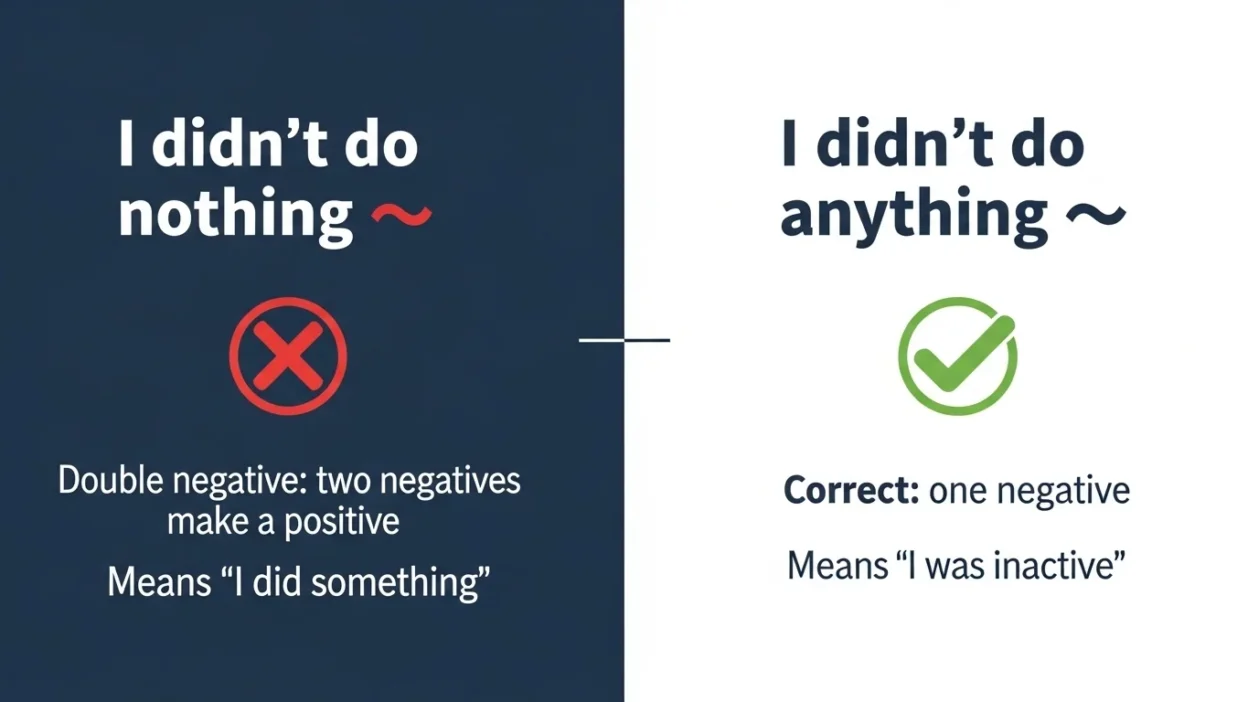
- I didn’t do anything ✅ correct (standard English)
- I didn’t do nothing ❌ incorrect (double negative in standard English)
👉 In short:
Use “anything” with “didn’t”
Why “I Didn’t Do Anything” Is Correct
In standard English, we use one negative word per clause.
- didn’t = negative
- So we use anything (not another negative)
Structure
didn’t + verb + anything
Examples
- I didn’t do anything wrong.
- She didn’t say anything.
- We didn’t see anything unusual.
👉 This is the correct and natural form in both writing and formal speech.
Why “I Didn’t Do Nothing” Is Incorrect
This sentence uses a double negative:
- didn’t (negative)
- nothing (another negative)
In standard grammar, two negatives cancel each other out or create confusion.
❌ Incorrect: I didn’t do nothing.
👉 Literally suggests: I did something
When Is “I Didn’t Do Nothing” Used?
While incorrect in formal English, it can appear in informal speech or dialects for emphasis.
Examples (Informal/Dialect)
- I didn’t do nothing! (strong emphasis)
⚠️ Important:
- Not suitable for formal writing
- Often avoided in professional communication
Didn’t Do Nothing vs Didn’t Do Anything: Key Differences
| Feature | Didn’t Do Anything | Didn’t Do Nothing |
|---|---|---|
| Grammar | Correct | Incorrect (standard English) |
| Structure | Single negative | Double negative |
| Usage | Formal & informal | Informal/dialect only |
| Meaning | No action | Confusing/emphatic |
Simple Trick to Remember
Here’s an easy rule:
👉 One negative = use “anything”
Think:
- didn’t → anything
- not → anything
✔ Never pair:
- didn’t + nothing
Common Mistakes to Avoid
1. Using Double Negatives
❌ Incorrect: I didn’t do nothing.
✅ Correct: I didn’t do anything.
2. Copying Informal Speech
Just because you hear it doesn’t mean it’s correct in writing.
3. Mixing Grammar Rules
Always match negatives properly.
Real-Life Examples
Everyday Correct Usage
- I didn’t do anything wrong.
Formal Writing
- The report didn’t reveal anything unusual.
Informal Speech (Not Recommended for Writing)
- I didn’t do nothing!
American vs British English Differences
There is no difference:
- Both American and British English follow the same rule
- Double negatives are considered incorrect in standard grammar
Related Words and LSI Keywords
To strengthen your understanding:
- Double negatives in English
- Anything vs nothing
- Negative sentences grammar
- Common English mistakes
- Informal vs formal English
- Grammar rules explained
FAQs
Which is correct: I didn’t do nothing or anything?
The correct sentence is “I didn’t do anything.”
Why is “didn’t do nothing” wrong?
Because it uses a double negative.
Can I ever use double negatives?
Only in informal speech or dialect, not in formal writing.
What does “anything” mean here?
It means any thing at all in a negative sentence.
Is this rule the same in UK and US English?
Yes, it’s the same in both.
Why do people say “didn’t do nothing”?
For emphasis or due to regional speech patterns.
What is a double negative?
Two negative words used in the same clause.
How can I avoid this mistake?
Use anything after didn’t or not.
Summary
The difference between “I didn’t do nothing” vs “I didn’t do anything” comes down to grammar rules. Standard English avoids double negatives, so “I didn’t do anything” is the correct and recommended form.
Using the correct structure ensures your English is clear, accurate, and professional.
Final Thoughts
While double negatives may sound natural in casual conversation, they can create confusion and are not accepted in formal English. By remembering to pair “didn’t” with “anything”, you can avoid a very common mistake.
With practice, this rule becomes automatic helping you communicate clearly and confidently in any situation.

Michael Brown is a contributor and author at BibliHub.com, where he produces insightful and research-oriented articles. He values depth, accuracy, and structure in his writing, ensuring that readers receive meaningful and well-supported information. Michael’s work is designed to inform, educate, and provide long-term value to readers interested in learning and exploration.