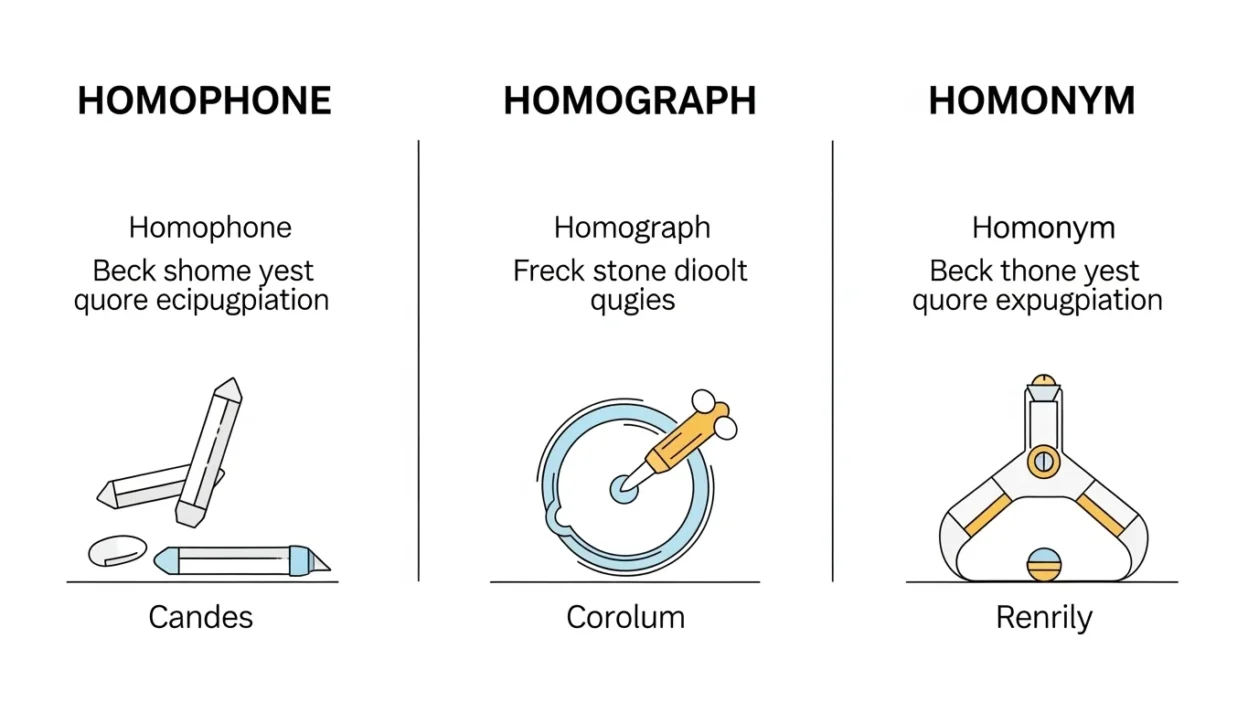
Confused by homophone vs homograph vs homonym? These terms sound technical, but the idea behind them is simple: they describe words that are similar in sound, spelling, or both but have different meanings.
This guide breaks everything down in a clear, friendly way so you can understand and remember the differences easily.
Quick Answer
- Homophones → same sound, different spelling/meaning
- Homographs → same spelling, different meaning (sometimes different pronunciation)
- Homonyms → same spelling or sound, different meanings
👉 In short:
Homophones = sound alike
Homographs = look alike
Homonyms = umbrella term (same form, different meanings)
What Are Homophones?
Homophones are words that sound the same but have different meanings and often different spellings.
Key Idea
👉 Same pronunciation, different meaning
Examples of Homophones
- to / too / two
- their / there / they’re
- flower / flour
Example Sentences
- I want to go too.
- She bought two apples.
Why They Matter
Homophones are common in speech but can cause spelling mistakes in writing.
What Are Homographs?
Homographs are words that are spelled the same but have different meanings. Sometimes they are pronounced differently too.
Key Idea
👉 Same spelling, different meaning (sometimes different sound)
Examples of Homographs
- lead (to guide) vs lead (a metal)
- tear (to rip) vs tear (a drop from the eye)
- bat (animal) vs bat (sports equipment)
Example Sentences
- He will lead the team.
- The pipe is made of lead.
Why They Matter
Homographs can cause confusion in reading and pronunciation.
What Are Homonyms?
Homonyms are a broader category. They are words that share the same spelling, pronunciation, or both—but have different meanings.
Key Idea
👉 Same form (sound or spelling), different meanings
Examples of Homonyms
- bat (animal) / bat (sports item)
- bank (financial institution) / bank (river edge)
👉 These are also examples of homographs.
Important Note
- All homophones and homographs can be considered homonyms, depending on definition.
Homophone vs Homograph vs Homonym: Key Differences
| Feature | Homophone | Homograph | Homonym |
|---|---|---|---|
| Sound | Same | May differ | Same or different |
| Spelling | Different | Same | Same or different |
| Meaning | Different | Different | Different |
| Example | to / too / two | lead / lead | bank / bank |
Simple Trick to Remember
Here’s an easy way to keep them straight:
- Homo = same
- Phone = sound → homophone (same sound)
- Graph = writing → homograph (same spelling)
👉 So:
- Homophone = same sound
- Homograph = same writing
- Homonym = general category
Common Mistakes to Avoid
1. Mixing Up the Terms
❌ Thinking all are the same
✅ Each has a specific meaning
2. Confusing Homophones in Writing
- your vs you’re
- its vs it’s
3. Mispronouncing Homographs
- lead (leed) vs lead (led)
Real-Life Examples
In Writing
- Choosing the correct homophone avoids spelling mistakes
In Reading
- Understanding homographs helps with correct meaning
In Vocabulary Learning
- Homonyms improve word awareness and context understanding
American vs British English Differences
There is no major difference:
- All three terms are used the same way
- Examples may vary slightly, but rules are identical
Related Words and LSI Keywords
To deepen your understanding:
- Homophones examples list
- Homographs meaning
- Homonyms definition
- English vocabulary confusion
- Same sounding words
- Same spelling words
FAQs
What is the difference between homophones and homographs?
Homophones sound the same, while homographs are spelled the same.
What are homonyms?
Homonyms are words that share the same spelling or pronunciation but have different meanings.
Are homophones also homonyms?
Yes, they can be considered a type of homonym.
Can homographs have different pronunciations?
Yes, some do (like lead).
What is an easy example of a homophone?
To, too, two.
What is an easy example of a homograph?
Bat (animal vs sports item).
Why are these important?
They help improve spelling, reading, and vocabulary skills.
Are these rules the same worldwide?
Yes, they apply in both American and British English.
Summary
Understanding homophone vs homograph vs homonym comes down to recognizing how words are similar. Homophones share the same sound, homographs share the same spelling, and homonyms act as a broader category that includes both.
Learning these distinctions helps you avoid confusion, improve your writing accuracy, and better understand English vocabulary.
Final Thoughts
While these terms may seem complicated at first, they become much easier once you break them down. By focusing on sound, spelling, and meaning, you can quickly identify whether a word is a homophone, homograph, or homonym.
With practice, you’ll start noticing these patterns everywhere making your English more precise, confident, and effective.

John Miller is a content author at BibliHub.com, known for creating clear, well-structured, and reader-friendly articles. He focuses on breaking down complex topics into simple, practical explanations that are easy to understand for a global audience. John emphasizes accuracy, research-based information, and logical presentation, making his work reliable and accessible for readers seeking trustworthy knowledge.